Astronomy is a hobby with a steep learning curve. The jump from "looking at the moon" to "hunting faint fuzzies" is filled with expensive potholes. I have a drawer full of unused eyepieces that serve as a monument to my early mistakes.
To save you time, frustration, and money, I've compiled the 10 most common mistakes aspiring visual astronomers make. If you can avoid these, you'll reach "Intermediate" status years faster.
1. Chasing Max Power
01The Mistake: Trying to view everything at 400x.
The Reality: Atmosphere limits you to 200x most nights. High power makes images dim and shaky.
The Fix: Use the "Medium Power" sweet spot (100x-150x) for 90% of observing.
2. Ignoring Eye Relief
02The Mistake: Buying a cheap 4mm Plössl.
The Reality: You have to press your eyeball against the glass to see anything. It's uncomfortable and fogs the lens.
The Fix: Look for eyepieces with >15mm 'Eye Relief' or use a Barlow with a longer focal length eyepiece.
3. "The Kit" Trap
03The Mistake: Buying a "Celestial Eyepiece Kit" with 12 filters and 6 eyepiecescase for $150.
The Reality: They are mediocre quality. You'll only use 2 of them.
The Fix: Spend that $150 on ONE really good eyepiece.
4. Misunderstanding Field of View
04The Mistake: Thinking all 25mm eyepieces show the same amount of sky.
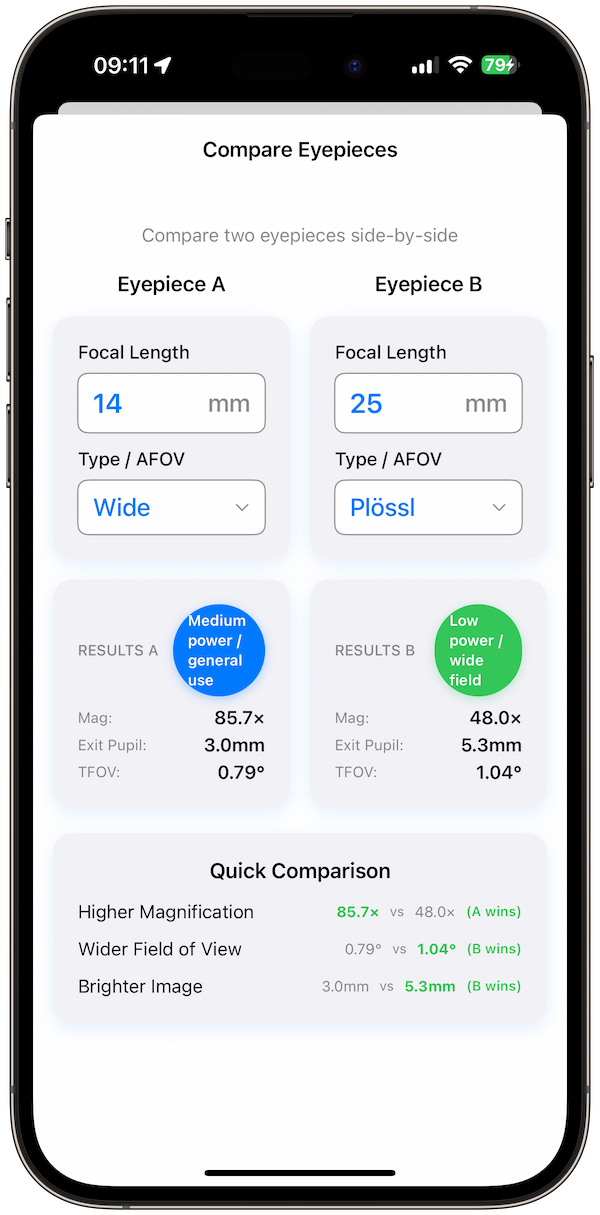
The Reality: A 25mm 82° eyepiece shows nearly double the area of a 25mm 50° Plössl.
The Fix: Always calculate TFOV (True Field of View).
5. Neglecting Dark Adaptation
05The Mistake: Checking your phone (white screen) while observing.
The Reality: It takes 30 mins to adapt to dark. One glance at a phone resets the clock.
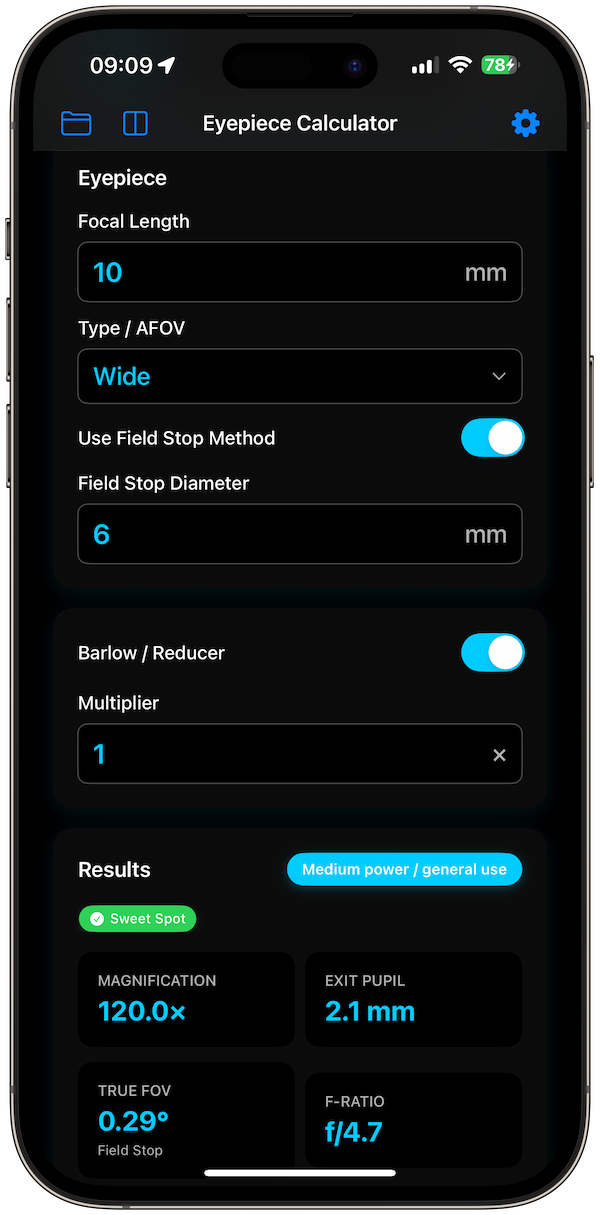
The Fix: Use a dedicated Red Night Mode app like Telescope Eyepiece Calculator.
6. The "Parfocal" Pain
06The Mistake: Mixing brands of eyepieces indiscriminately.
The Reality: Every time you swap eyepieces, you have to refocus. It disrupts your flow.
The Fix: Buy "Parfocal" rings or stick to one series of eyepieces.
How to Avoid These Mistakes (The Easy Way)
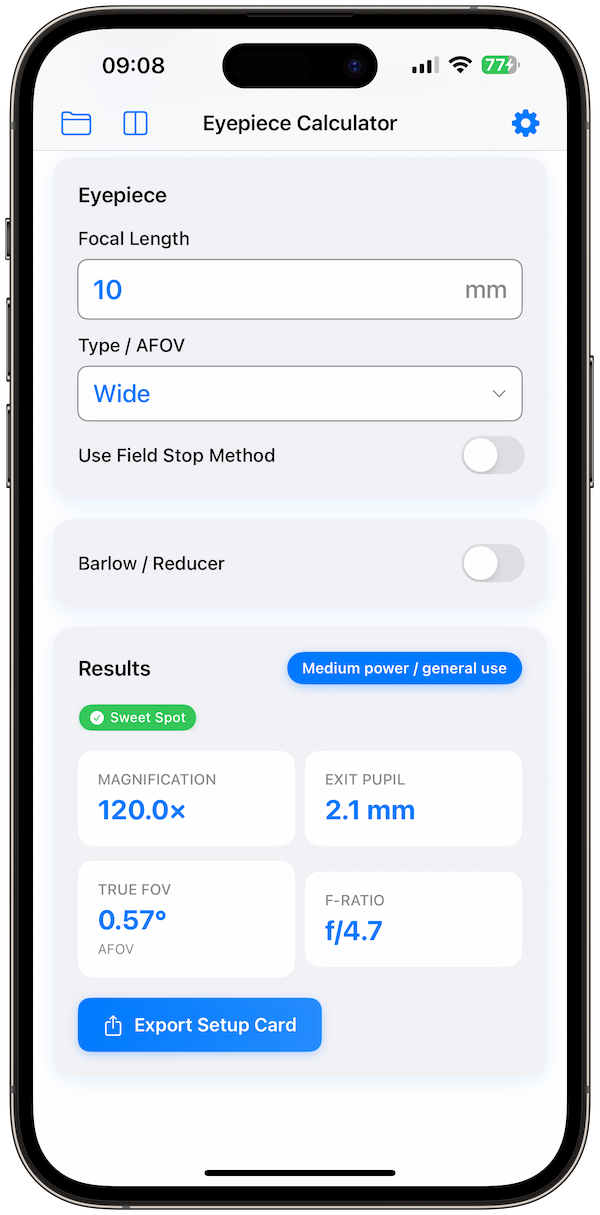
Most of these mistakes come from a lack of data. You buy a 6mm eyepiece without realizing it gives a 0.3mm exit pupil (too dim). You buy a 40mm eyepiece without realizing the TFOV is too wide for your 1.25" focuser (vignetting).
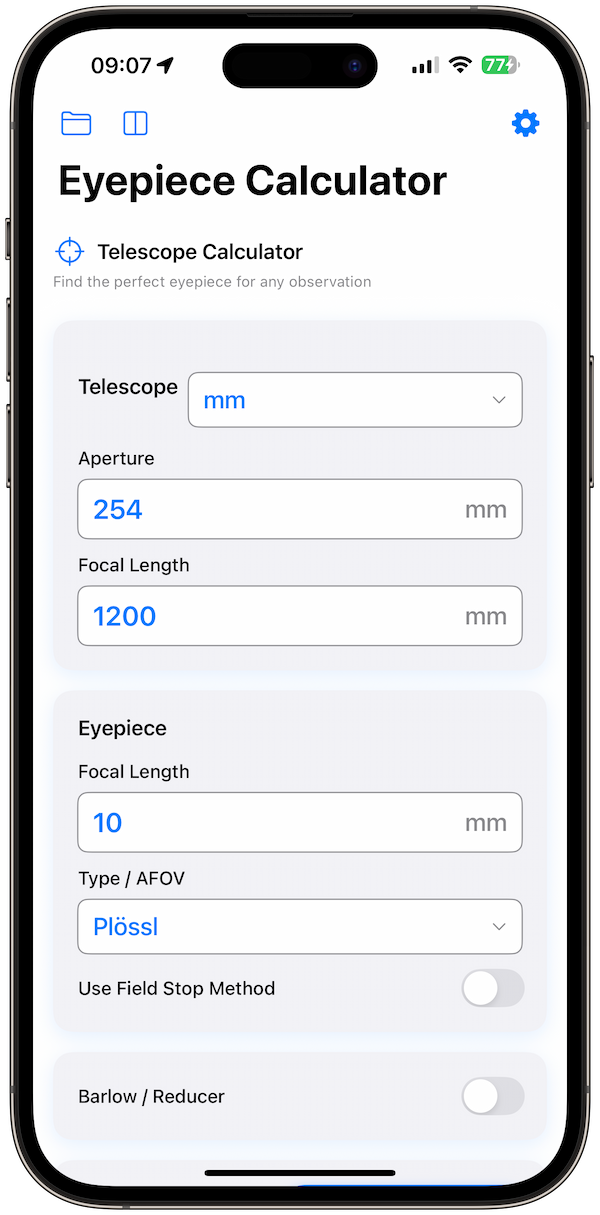
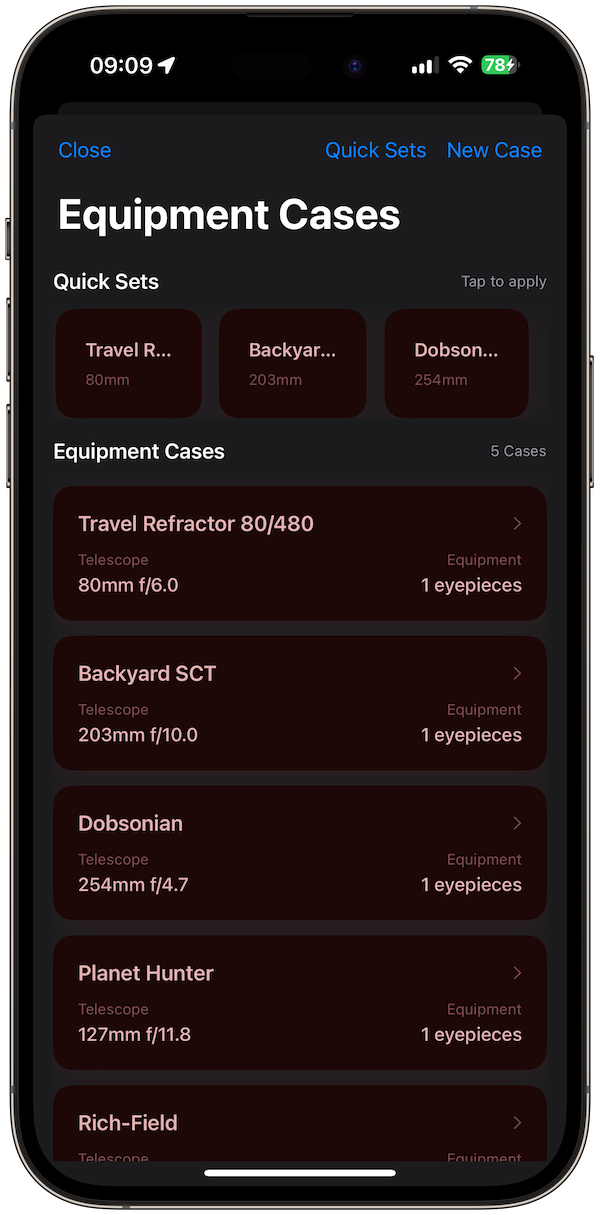
I built Telescope Eyepiece Calculator to act as a sanity check. Before you buy, input the specs into the app.
The "Sanity Check" Workflow
- Check Magnification: Is it under 250x?
- Check Exit Pupil: Is it between 0.5mm and 7.0mm?
- Check TFOV: Does it frame your favorite target? (Use the Simulator)
Conclusion
Mistakes are part of learning, but they don't have to be expensive. Learn the physics, plan your kit, and respect the atmosphere. Your eyes (and wallet) will thank you.