Telescopes are fixed instruments. If you buy a 1000mm focal length scope, it stays 1000mm... unless you use optics to "hack" the physics.
Barlow Lenses and Focal Reducers act like the transmission in a car, allowing you to shift your telescope's performance gears. But use them wrong, and you'll ruin the view.
1. The Barlow Lens (The Multiplier)
A Barlow lens attaches between your telescope and eyepiece. It multiplies the effective focal length.
- 2x Barlow: Doubles magnification (1000mm scope becomes 2000mm).
- 3x/5x Barlow: Extreme multiplication, mostly for planetary imaging.
2. The Focal Reducer (The Compressor)
Also called a "Telecompressor," this does the opposite. It shrinks your effective focal length, usually by 0.63x or 0.5x.
Common Mistakes
Stacking Barlows
Putting a 2x Barlow into a 3x Barlow creates a fuzzy, dim mess. Optical quality degrades with every glass element you add.
Vignetting
Using a reducer on a telescope not designed for it (like some Newtonians) can cause the corners of the image to turn black.
Test Before You Buy
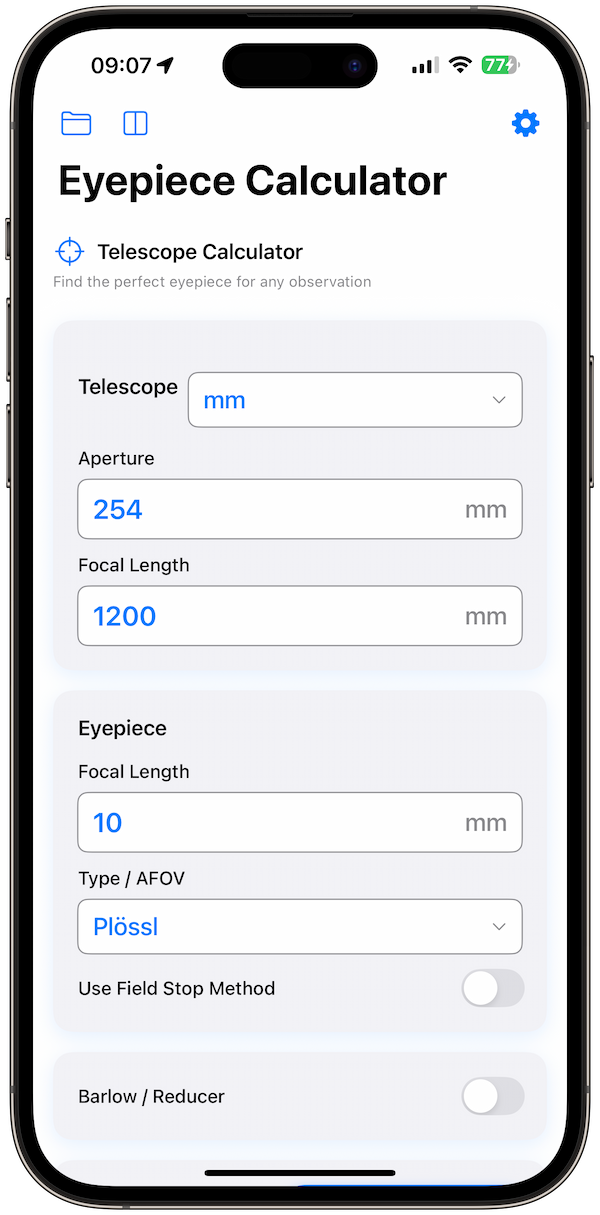
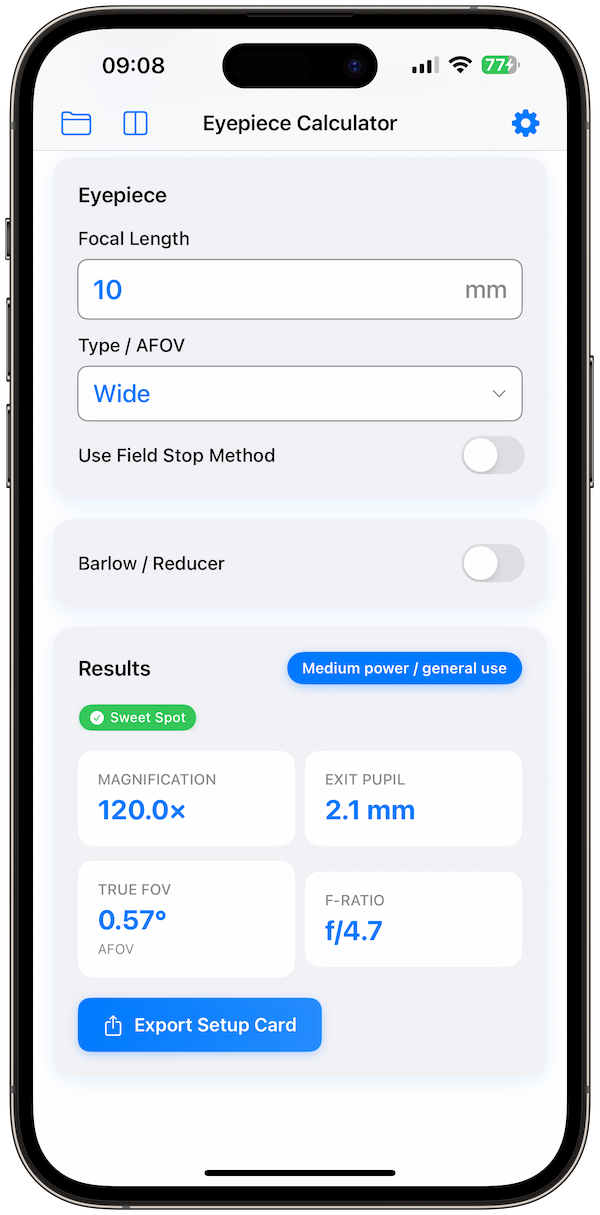
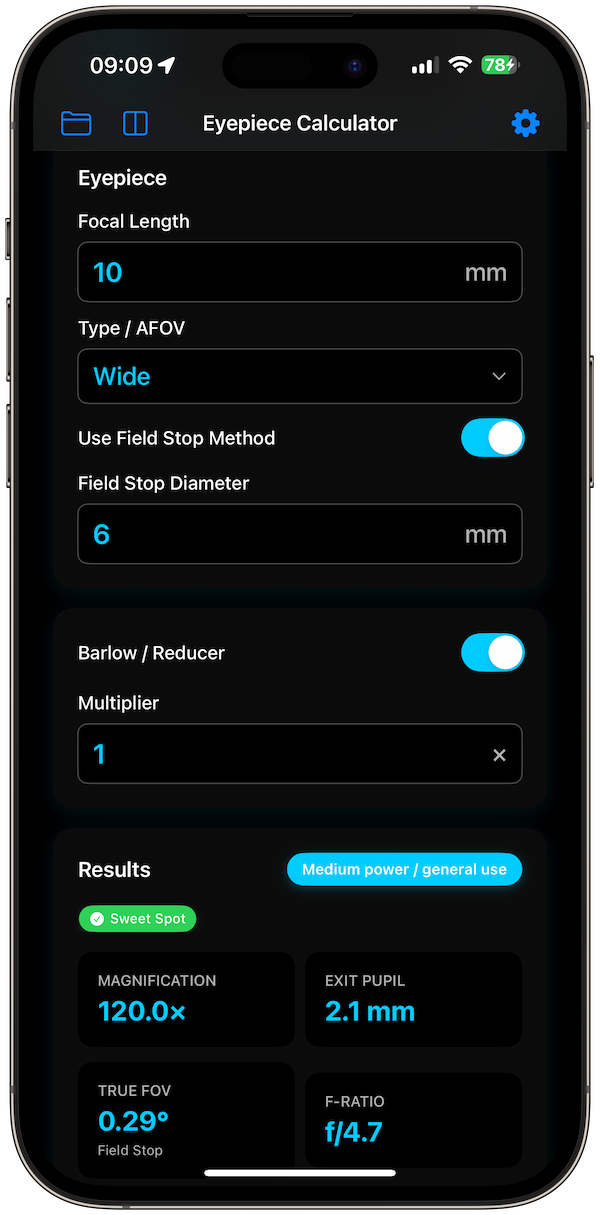
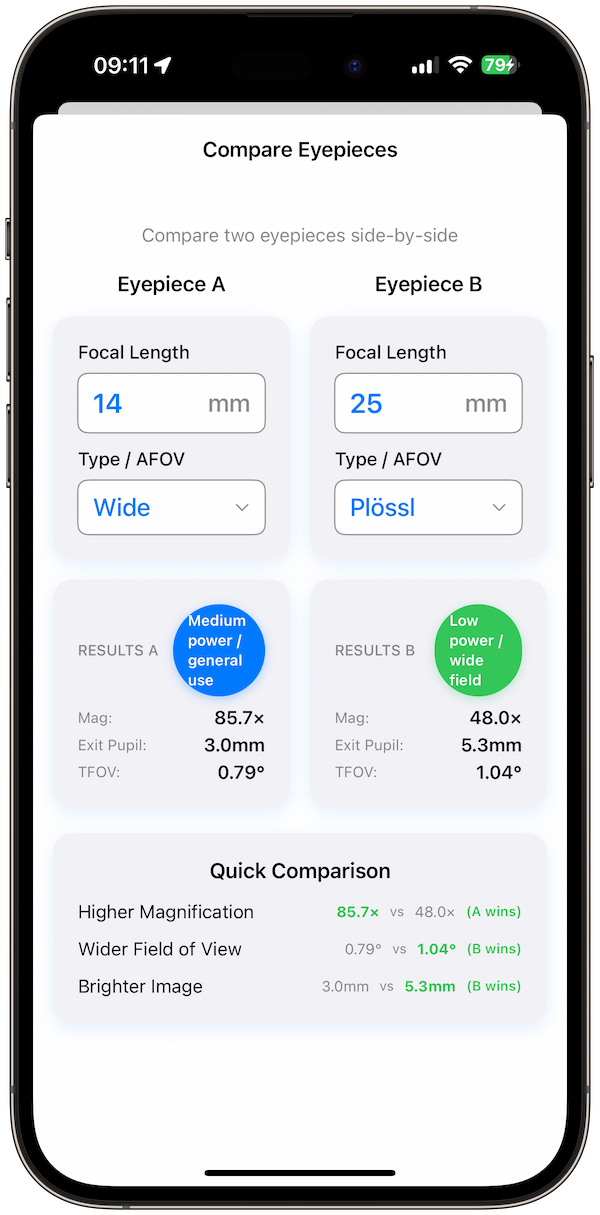
Telescope Eyepiece Calculator has dedicated slots for Barlows and Reducers.
You can toggle a "2x Barlow" on and off instantly to see:
- Does the magnification exceed the atmospheric limit?
- Does the TFOV become too small for my target?
/7 main calculator advanced calculations.png)
Conclusion
Barlows and Reducers are powerful tools in your kit. Use a Barlow for planets. Use a Reducer for nebulae. And use the app to check your math before you commit.
Simulate Optical Modifiers
Test any Barlow or Reducer combination instantly.
Download Telescope Eyepiece Calculator