Understanding exit pupil is crucial for getting the best views through your telescope. The exit pupil determines how much light reaches your eye and affects both image brightness and viewing comfort. Get it wrong and you'll either waste light or strain your eyes.
This guide explains the exit pupil formula with real examples, shows you how to match it to your eyes and observing conditions, and demonstrates how Telescope Eyepiece Calculator Pro handles these calculations automatically.
What Is Exit Pupil?
The exit pupil is the diameter of the light beam that exits the eyepiece and enters your eye. It's measured in millimeters and directly affects how bright and comfortable your view will be.
Why Exit Pupil Matters
- Image brightness: Larger exit pupils = brighter images
- Eye comfort: Must match your eye's pupil diameter
- Light efficiency: Exit pupils larger than your eye's pupil waste light
- Viewing conditions: Different exit pupils work better in different situations
The Exit Pupil Formula
The formula for calculating exit pupil is simple:
Exit Pupil = Telescope Aperture ÷ Magnification
But understanding what this means for your observing is the key to better views.
Example 1: Standard Setup
Let's calculate exit pupil for a common telescope setup:
- Telescope aperture: 200 mm (8 inches)
- Magnification: 50×
Step-by-Step Calculation
Step 1: Identify the values
Aperture = 200 mm
Magnification = 50×
Step 2: Apply the formula
Exit Pupil = 200 ÷ 50 = 4 mm
Result: A 4 mm exit pupil - good for most observing conditions
Example 2: High Magnification
Using the same telescope with higher magnification:
- Telescope aperture: 200 mm
- Magnification: 200×
Calculation Process
Exit Pupil: 200 ÷ 200 = 1 mm
Result: Very small exit pupil - dimmer image, good for bright objects like planets
Example 3: Low Magnification
Using the same telescope with low magnification:
- Telescope aperture: 200 mm
- Magnification: 25×
Calculation Process
Exit Pupil: 200 ÷ 25 = 8 mm
Result: Large exit pupil - very bright image, good for deep sky objects
Matching Exit Pupil to Your Eyes
Your eye's pupil diameter changes with age and lighting conditions. Understanding this helps you choose the right eyepieces.
Age-Related Pupil Sizes
- Young eyes (under 30): 7-8 mm in dark conditions
- Middle age (30-50): 5-6 mm in dark conditions
- Older eyes (50+): 4-5 mm in dark conditions
- Daylight viewing: 2-3 mm for all ages
Optimal Exit Pupil Guidelines
- Maximum useful: Don't exceed your eye's pupil diameter
- Deep sky objects: 4-7 mm exit pupil for maximum light gathering
- Planetary viewing: 1-3 mm exit pupil for high magnification
- General observing: 2-5 mm exit pupil for balanced views
Exit Pupil and Observing Conditions
Different exit pupils work better under different conditions and for different types of objects.
Deep Sky Objects (Nebulae, Galaxies)
- Best exit pupil: 4-7 mm
- Why: Maximum light gathering for faint objects
- Example: 200mm scope at 30× = 6.7 mm exit pupil
Planetary Observation
- Best exit pupil: 1-3 mm
- Why: High magnification for detail, but still bright enough
- Example: 200mm scope at 100× = 2 mm exit pupil
Lunar Observation
- Best exit pupil: 2-4 mm
- Why: Good balance of magnification and brightness
- Example: 200mm scope at 50× = 4 mm exit pupil
Common Exit Pupil Mistakes
- Too large: Exit pupils larger than your eye's pupil waste light
- Too small: Very small exit pupils make images dim and hard to see
- Ignoring age: Not accounting for your eye's actual pupil size
- Wrong conditions: Using the same exit pupil for all observing
How Telescope Eyepiece Calculator Pro Simplifies This
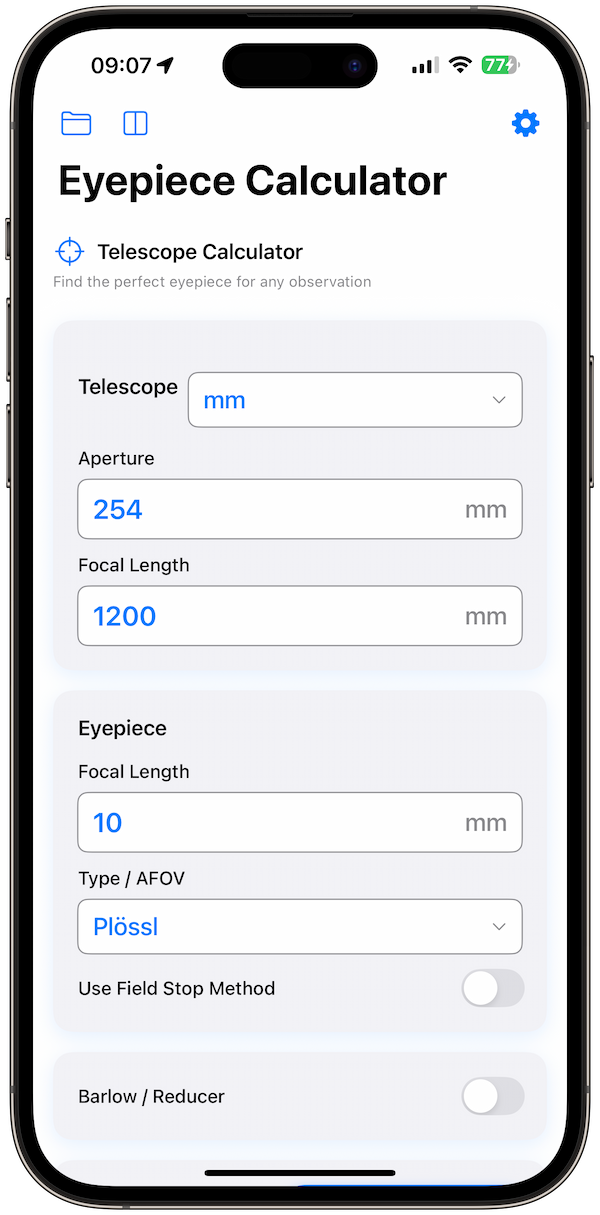
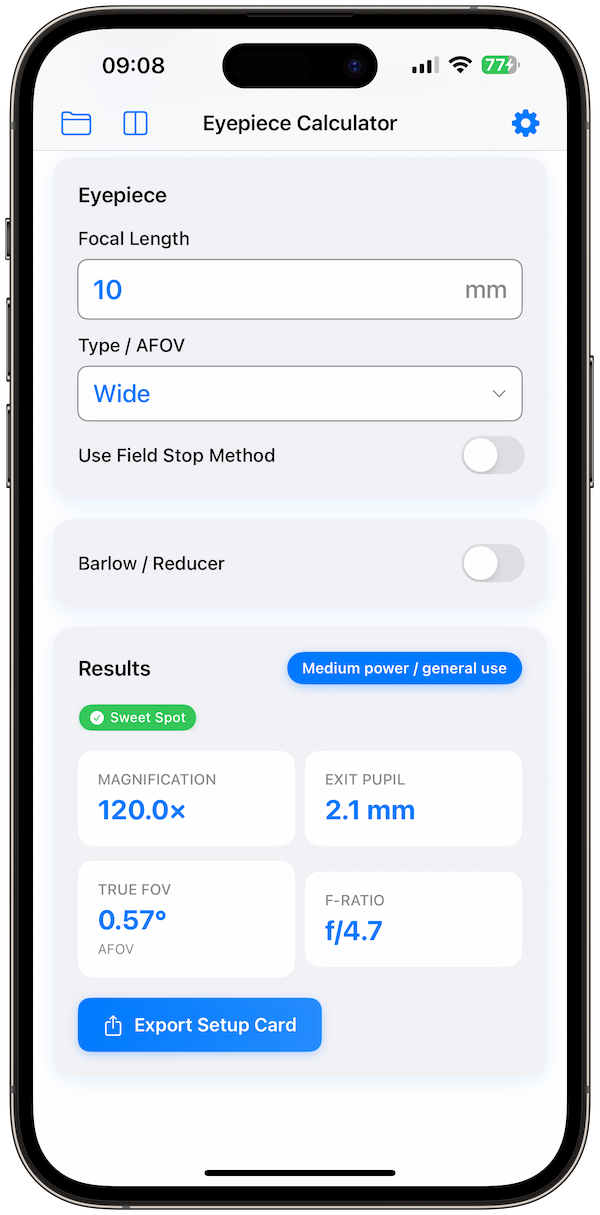
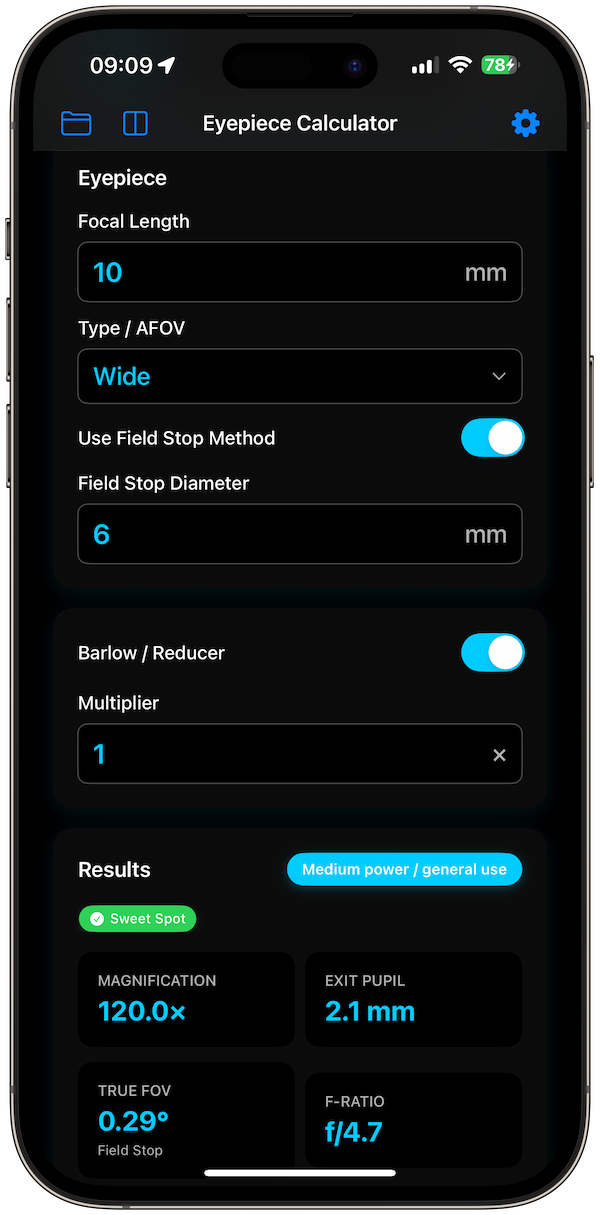
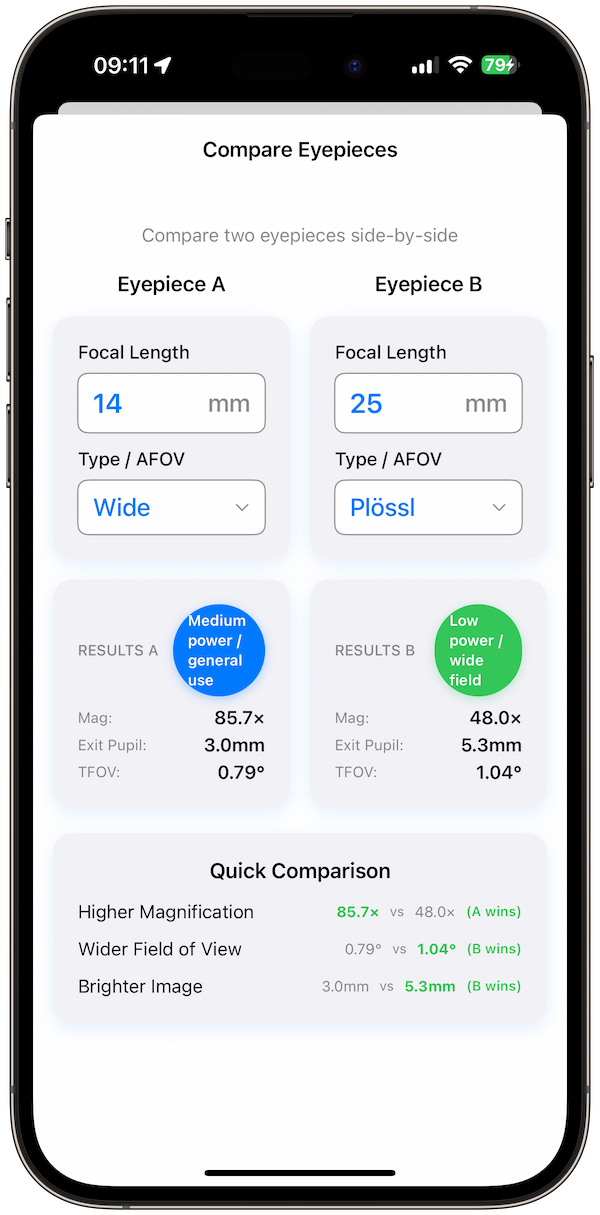
Telescope Eyepiece Calculator Pro calculates exit pupil automatically:
- Live calculations: See exit pupil as you adjust eyepiece focal length
- Visual indicators: Color-coded power categories show optimal ranges
- Multiple setups: Compare different eyepieces side by side
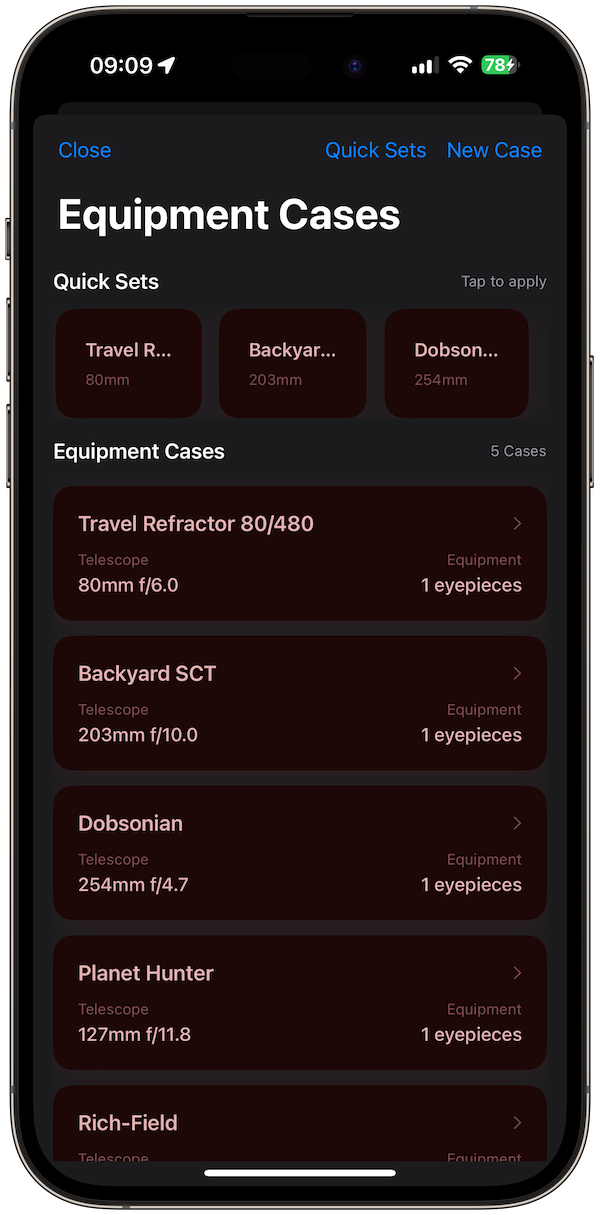
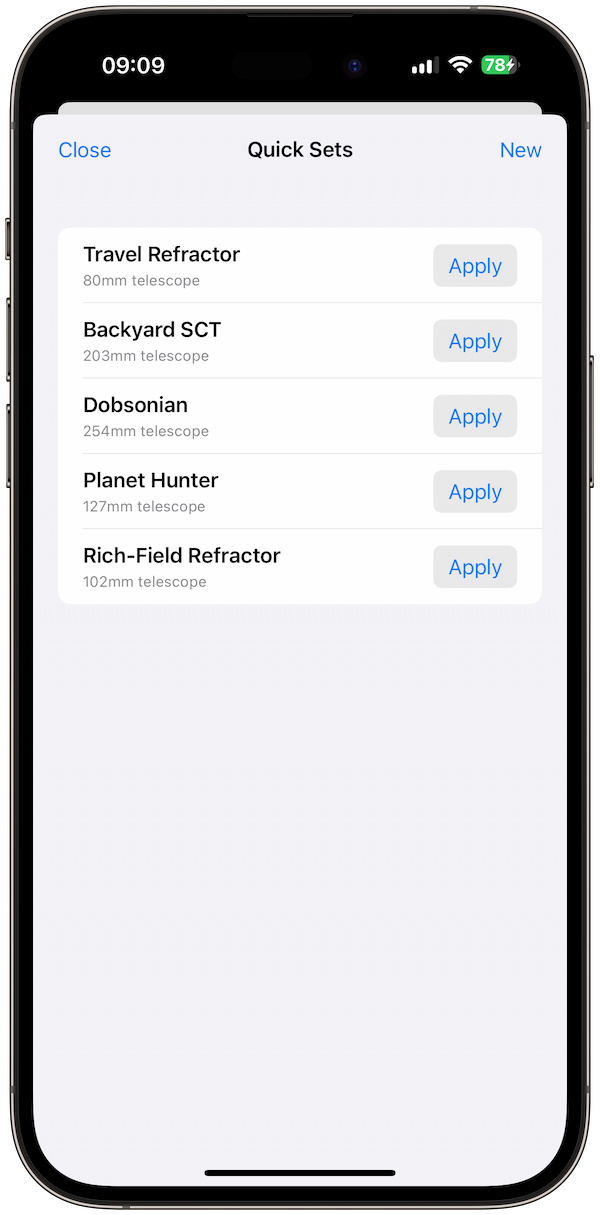
- Equipment cases: Save your favorite combinations
- Real-time results: All calculations update instantly as you type
💡 Pro Tip: Use Telescope Eyepiece Calculator Pro's "Power Category" badges to instantly see if your eyepiece combination provides low, medium, or high power for your telescope.
Professional Tips for Exit Pupil Selection
- Test your limits: Find your eye's actual pupil size in dark conditions
- Match to targets: Use larger exit pupils for faint objects, smaller for bright ones
- Consider conditions: Light pollution affects optimal exit pupil choices
- Plan your session: Have eyepieces ready for different exit pupil ranges
Exit Pupil and Eyepiece Selection
Understanding exit pupil helps you choose the right eyepieces for your telescope and observing goals.
For Deep Sky Observing
- Target exit pupil: 4-7 mm
- Eyepiece choice: Longer focal length eyepieces
- Example: 200mm scope needs 30-50 mm eyepieces
For Planetary Observing
- Target exit pupil: 1-3 mm
- Eyepiece choice: Shorter focal length eyepieces
- Example: 200mm scope needs 8-25 mm eyepieces
Final Thoughts
Exit pupil is a crucial factor in telescope performance that many observers overlook. By understanding how to calculate and optimize exit pupil, you can get significantly better views from your telescope.
Ready to optimize your telescope setup? Download Telescope Eyepiece Calculator Pro and get instant exit pupil calculations for any telescope and eyepiece combination.