Financial ratio analysis is the cornerstone of business evaluation, providing insights into a company's financial health, performance, and future prospects. Whether you're an investor, analyst, student, or business owner, understanding financial ratios is essential for making informed decisions. This comprehensive guide explores how Financial Ratios Pro simplifies complex financial analysis and provides professional-grade insights.
Understanding Financial Ratios
Financial ratios transform raw financial data into meaningful insights by comparing different aspects of a company's financial statements. These ratios fall into five main categories, each revealing different aspects of business performance.
Five Categories of Financial Ratios
- Liquidity Ratios: Measure a company's ability to meet short-term obligations
- Profitability Ratios: Assess how effectively a company generates profits
- Efficiency Ratios: Evaluate how well a company uses its assets
- Leverage Ratios: Examine a company's debt levels and financial risk
- Valuation Ratios: Help determine if a company's stock is fairly valued
Liquidity Ratios: Short-Term Financial Health
Liquidity ratios measure a company's ability to pay its short-term debts and obligations. These are crucial for assessing financial stability and operational flexibility.
Current Ratio
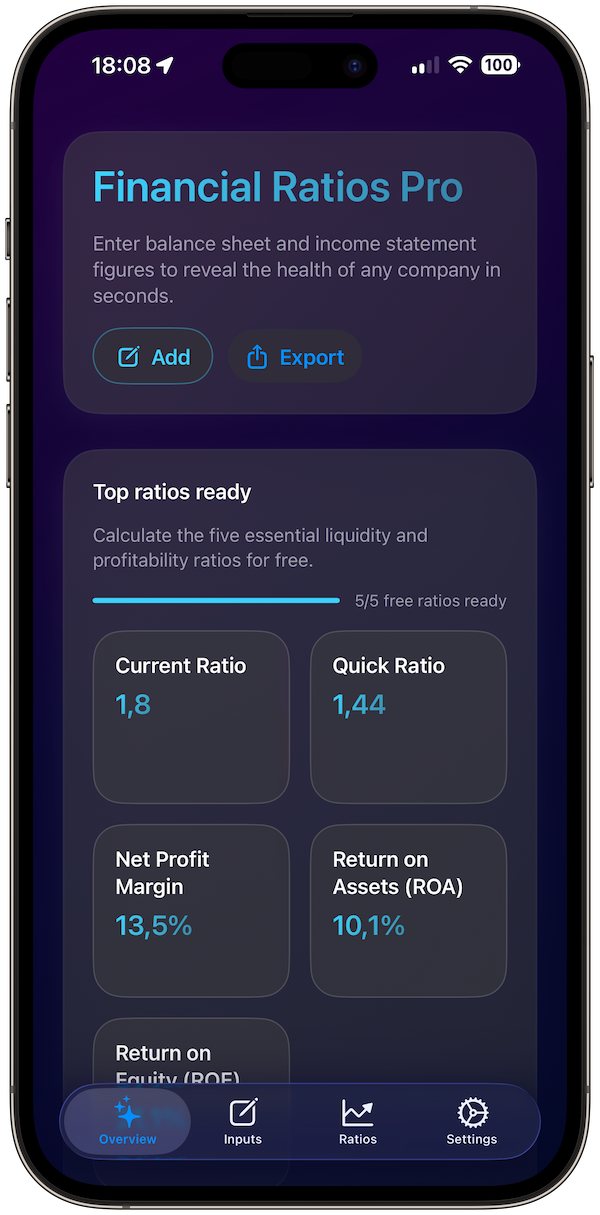
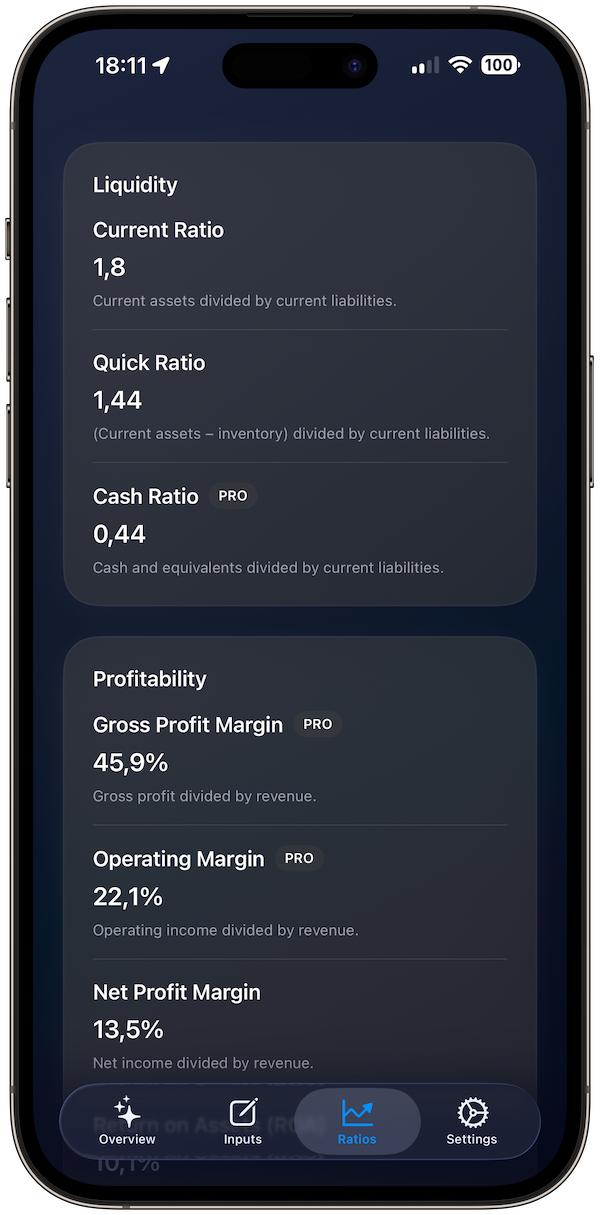
The current ratio compares current assets to current liabilities, providing a quick assessment of short-term financial health. A ratio above 1.0 indicates the company can cover its short-term obligations.
Quick Ratio (Acid-Test Ratio)
The quick ratio is more conservative, excluding inventory from current assets. This ratio focuses on the most liquid assets and provides a stricter test of short-term liquidity.
Profitability Ratios: Earnings Performance
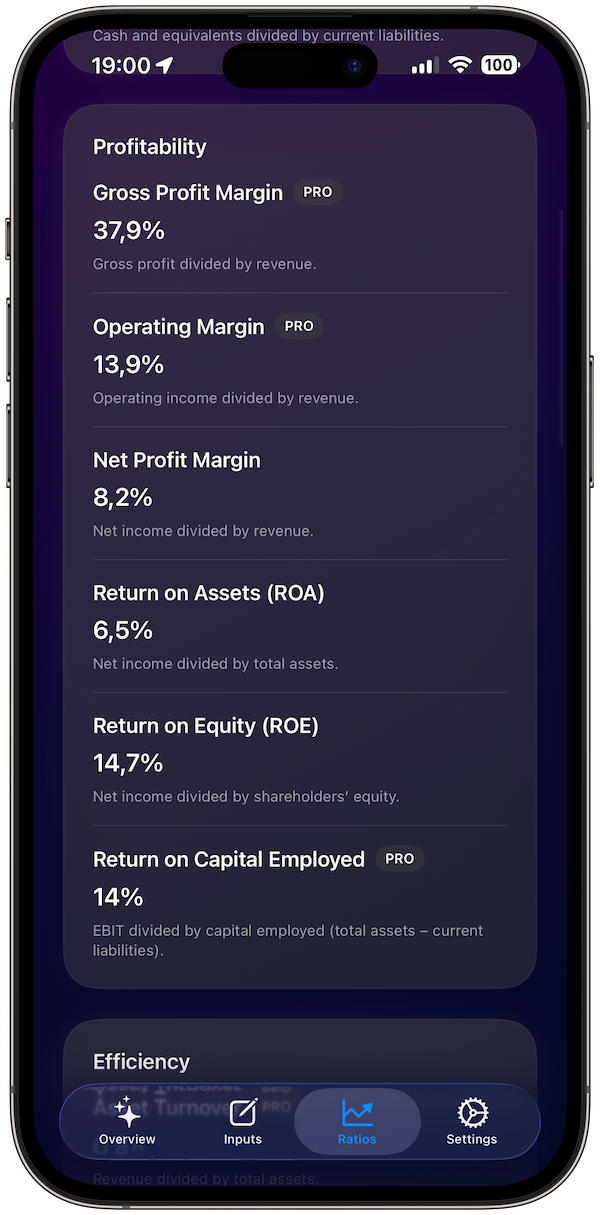
Profitability ratios reveal how effectively a company converts revenue into profits and generates returns for shareholders.
Net Profit Margin
This ratio shows what percentage of revenue becomes net profit after all expenses. Higher margins indicate better cost control and pricing power.
Return on Assets (ROA)
ROA measures how efficiently a company uses its assets to generate profits. It's calculated by dividing net income by total assets.
Return on Equity (ROE)
ROE shows how effectively a company uses shareholders' equity to generate profits. This is particularly important for investors evaluating stock performance.
Efficiency Ratios: Asset Utilization
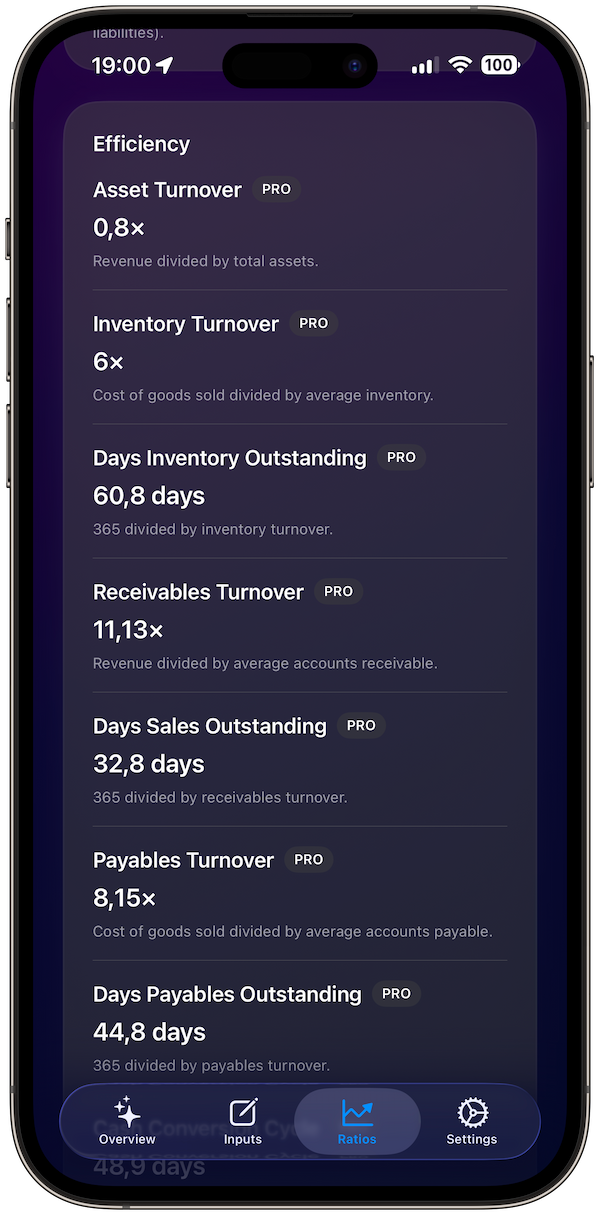
Efficiency ratios evaluate how well a company manages its assets and operations to generate revenue.
Asset Turnover Ratio
This ratio measures how efficiently a company uses its assets to generate sales. Higher turnover indicates better asset utilization.
Inventory Turnover
For retail and manufacturing companies, inventory turnover shows how quickly inventory is sold and replaced, indicating operational efficiency.
Leverage Ratios: Debt Management
Leverage ratios assess a company's debt levels and financial risk, helping evaluate long-term financial stability.
Debt-to-Equity Ratio
This ratio compares total debt to shareholders' equity, showing the balance between debt and equity financing.
Interest Coverage Ratio
The interest coverage ratio measures a company's ability to pay interest on its debt, indicating financial stability and creditworthiness.
How Financial Ratios Pro Simplifies Analysis
Financial Ratios Pro automates complex calculations and provides professional-grade analysis tools that would typically require extensive spreadsheet work.
Automated Calculations
The app instantly calculates 25+ financial ratios from your input data, eliminating manual calculation errors and saving hours of work.
Professional Reports
Generate clean, professional PDF and CSV reports suitable for presentations, investment analysis, or academic submissions.
Multiple Company Profiles
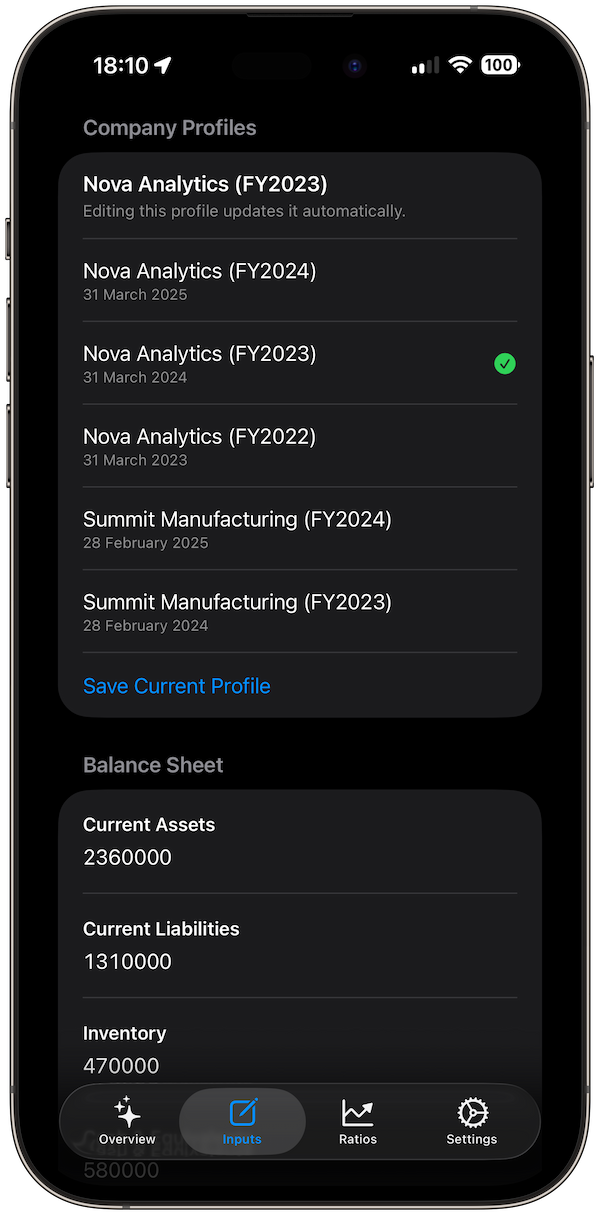
Save and compare multiple companies, making it easy to conduct comparative analysis and track performance over time.
Industry Benchmarking
Understanding how a company's ratios compare to industry averages is crucial for meaningful analysis.
Industry Standards
Different industries have different typical ratio ranges. A current ratio of 2.0 might be excellent for a manufacturing company but low for a service business.
Trend Analysis
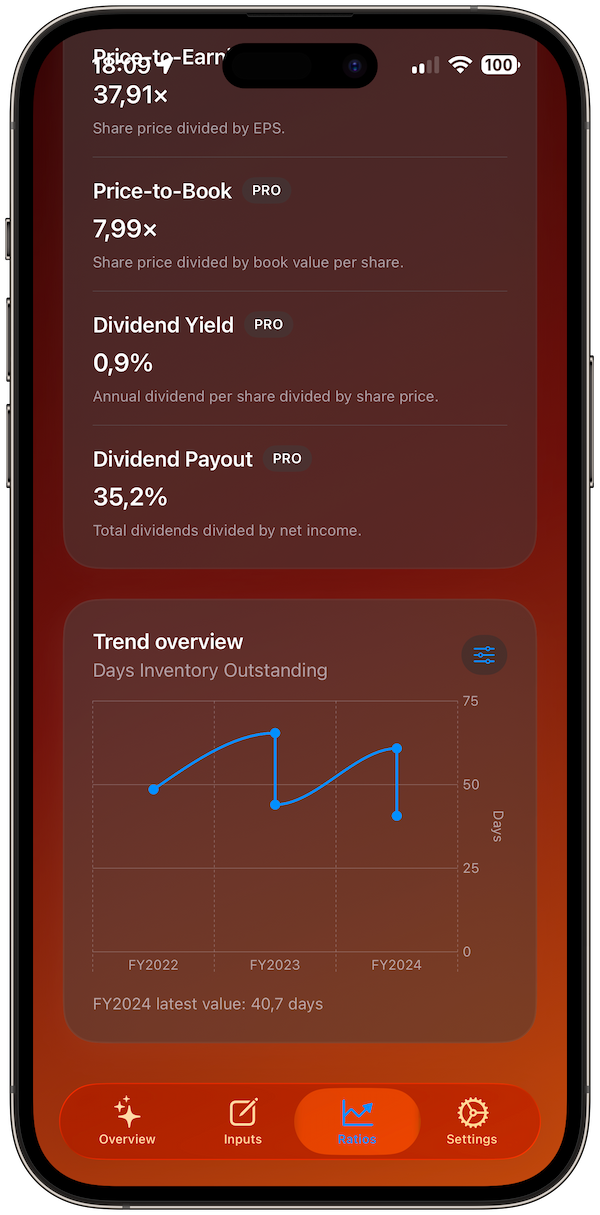
Financial Ratios Pro helps track ratio changes over time, revealing whether a company is improving or declining in key areas.
Common Analysis Mistakes to Avoid
Even experienced analysts can make errors when interpreting financial ratios. Here are common pitfalls to avoid.
Ignoring Industry Context
Ratios must be evaluated within industry context. A debt-to-equity ratio of 0.5 might be high for a utility company but low for a technology startup.
Focusing on Single Ratios
No single ratio tells the complete story. Always analyze multiple ratios together to get a comprehensive view of financial health.
Ignoring Quality of Financial Data
Ratio analysis is only as good as the underlying financial statements. Ensure data accuracy and understand accounting policies.
Advanced Analysis Techniques
Professional financial analysis goes beyond basic ratio calculations to include trend analysis, peer comparisons, and scenario modeling.
DuPont Analysis
This technique breaks down ROE into its component parts (profit margin, asset turnover, and equity multiplier) to identify the drivers of profitability.
Ratio Trend Analysis
Track how ratios change over multiple periods to identify trends, seasonal patterns, and potential problems before they become critical.
Conclusion
Financial ratio analysis is an essential skill for anyone involved in business evaluation, investment decisions, or financial planning. Financial Ratios Pro provides the tools and insights needed to conduct professional-grade analysis efficiently and accurately.
By understanding and applying these ratios systematically, you can make more informed decisions about investments, business partnerships, and financial strategies. The key is to use ratios as part of a comprehensive analysis framework, not as standalone indicators.