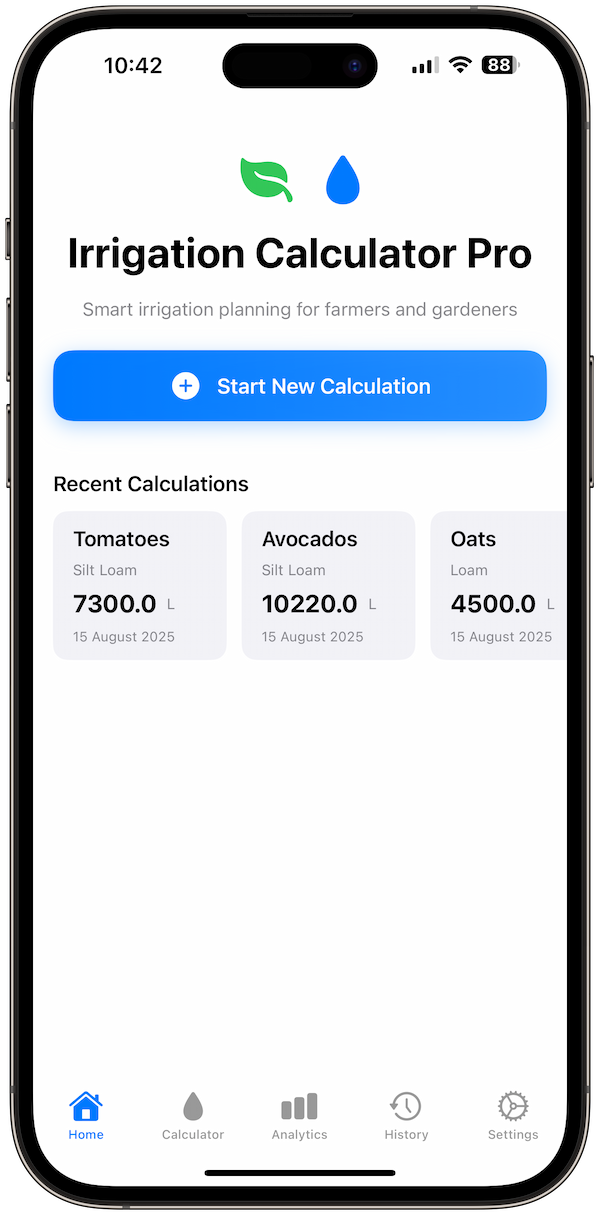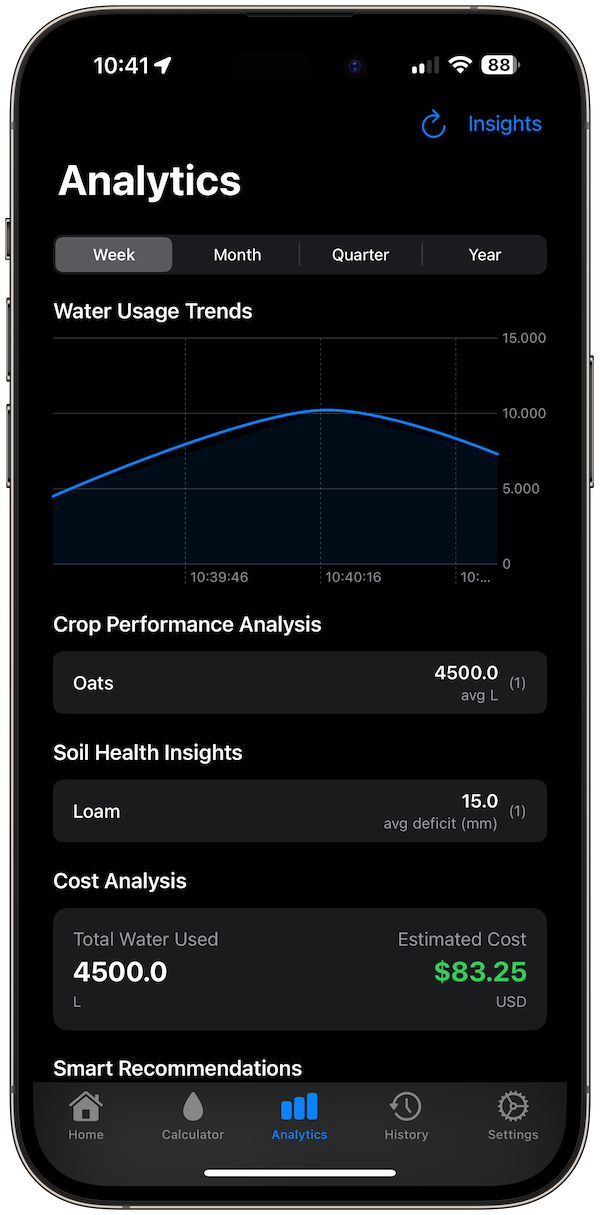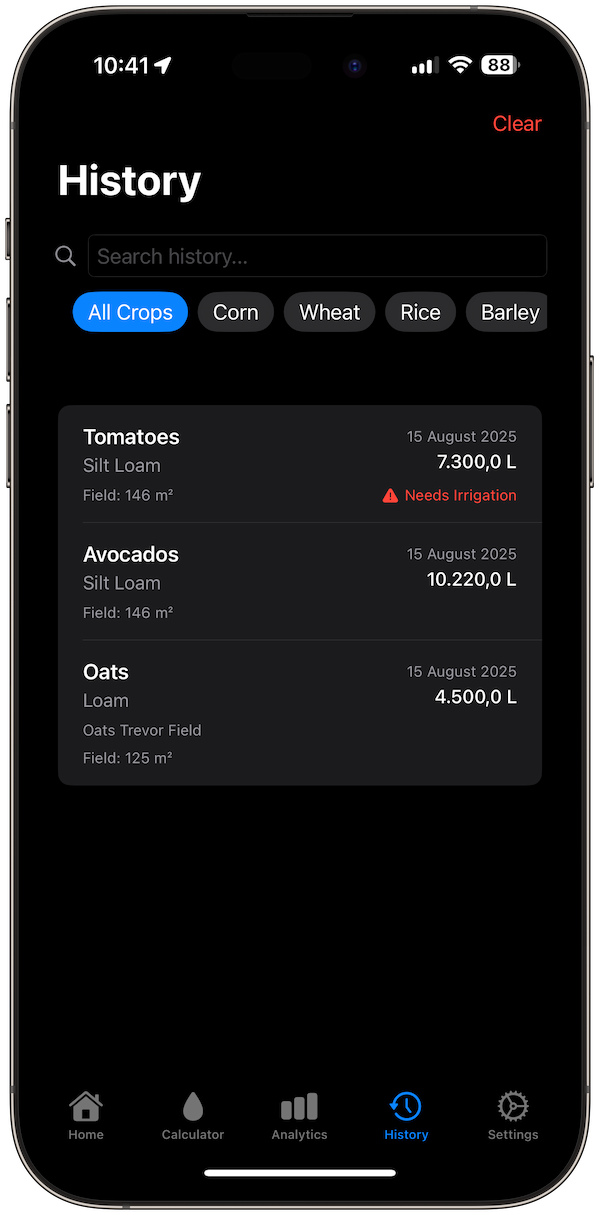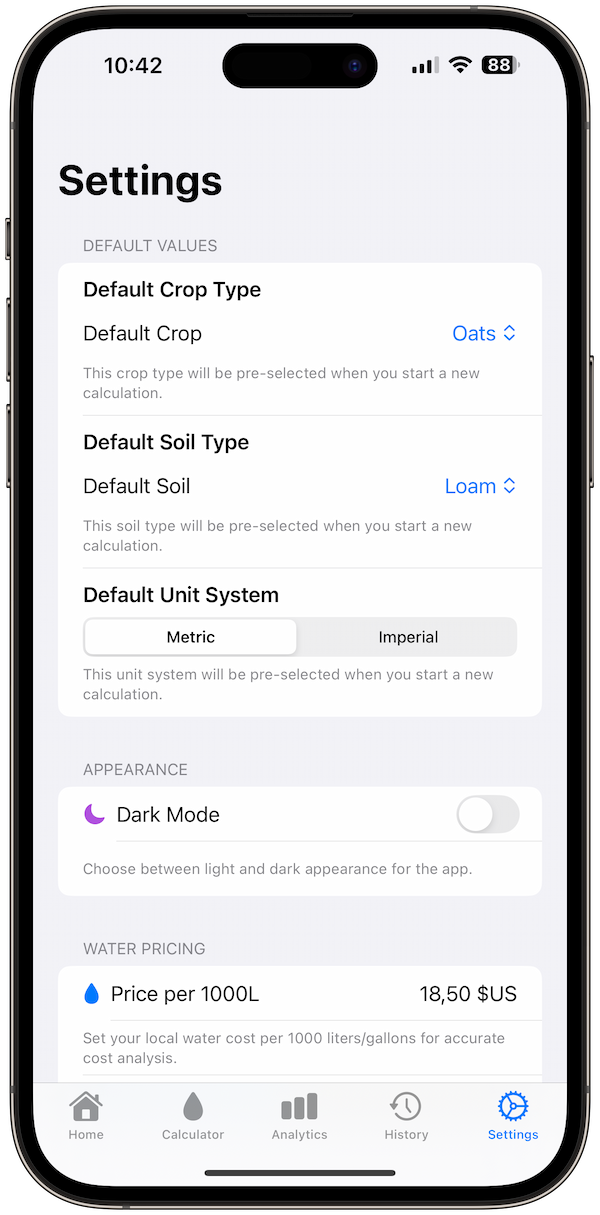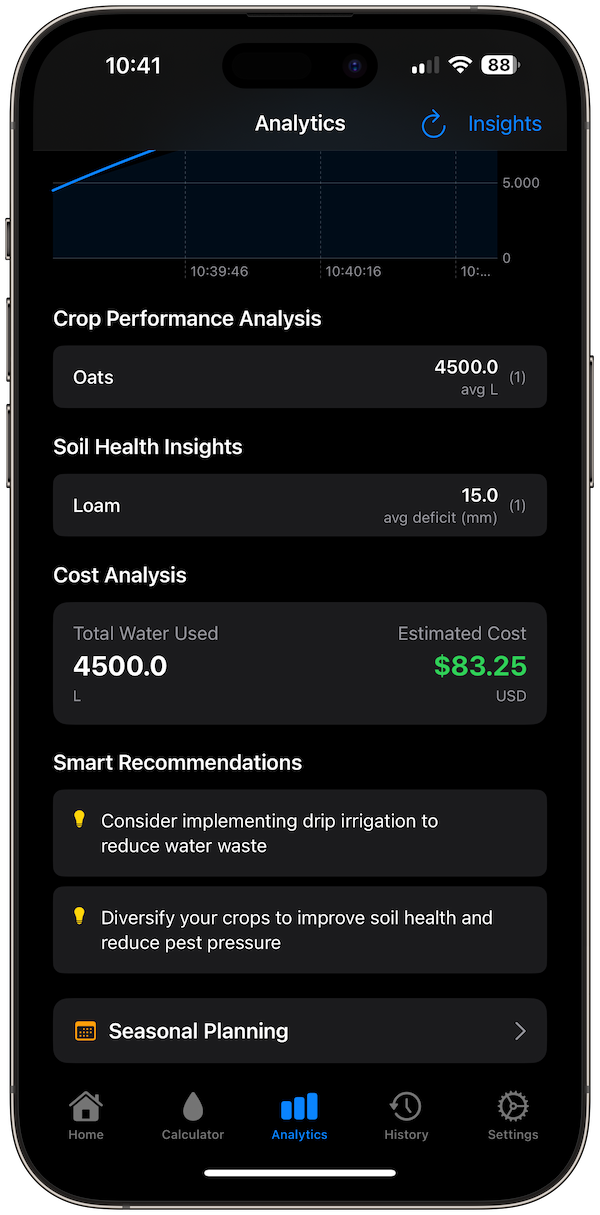
Precision irrigation is the cornerstone of modern agriculture, ensuring optimal water use while maximizing crop yields and maintaining soil health. Whether you're a farmer, agricultural consultant, or irrigation specialist, understanding water management principles is essential for sustainable and profitable farming. This comprehensive guide explores how Irrigation Calculator Pro simplifies complex irrigation calculations and helps you implement efficient water management strategies.
Understanding Irrigation Fundamentals
Effective irrigation requires understanding the relationship between water, soil, plants, and climate. Modern irrigation planning involves precise calculations based on scientific principles and local conditions.
Key Irrigation Parameters
- Evapotranspiration (ET): Water lost through plant transpiration and soil evaporation
- Crop Coefficient (Kc): Plant-specific water use factors
- Soil Water Holding Capacity: How much water soil can retain
- Root Zone Depth: Depth of active root system
- Management Allowable Depletion (MAD): Maximum safe water depletion
FAO Standards and International Guidelines
The Food and Agriculture Organization (FAO) provides internationally recognized standards for irrigation planning and water management.
FAO-56 Methodology
The FAO-56 method is the gold standard for calculating crop water requirements using:
- Reference Evapotranspiration (ET0): Based on weather data
- Crop-Specific Coefficients: Kc values for different growth stages
- Soil Water Balance: Accounting for rainfall and irrigation
- Irrigation Efficiency: System-specific water delivery factors
Climate Data Requirements
- Temperature: Daily maximum and minimum temperatures
- Humidity: Relative humidity or vapor pressure
- Wind Speed: Average wind speed at 2m height
- Solar Radiation: Sunshine hours or solar radiation data
- Precipitation: Daily rainfall measurements
Crop-Specific Water Requirements
Different crops have unique water needs that vary throughout their growth cycle. Understanding these requirements is essential for efficient irrigation planning.
Growth Stage Water Needs
- Germination/Emergence: Consistent moisture for seed sprouting
- Vegetative Growth: Steady water supply for leaf development
- Flowering: Critical period requiring adequate moisture
- Fruit Development: Peak water demand for yield formation
- Maturation: Reduced water needs as crop matures
Common Crop Coefficients
- Wheat: 0.3-1.1 depending on growth stage
- Corn: 0.4-1.2 with peak during tasseling
- Tomatoes: 0.3-1.1 with critical flowering period
- Cotton: 0.3-1.2 with high demand during boll development
- Rice: 0.8-1.2 with continuous flooding requirements
Soil Types and Water Management
Soil characteristics significantly impact irrigation planning and water management strategies.
Soil Texture Categories
- Sandy Soils: Low water holding capacity, frequent irrigation needed
- Loamy Soils: Balanced water retention and drainage
- Clay Soils: High water holding capacity, slow drainage
- Organic Soils: High water retention, good for water conservation
Water Holding Capacity
- Field Capacity: Maximum water soil can hold against gravity
- Permanent Wilting Point: Minimum water for plant survival
- Available Water: Difference between field capacity and wilting point
- Management Allowable Depletion: Safe level of water depletion
Irrigation System Types and Efficiency
Different irrigation systems have varying efficiency levels and application methods that affect water use and crop performance.
Surface Irrigation
- Flood Irrigation: Traditional method, 60-80% efficiency
- Furrow Irrigation: Water applied in furrows, 70-85% efficiency
- Basin Irrigation: Water contained in basins, 75-90% efficiency
Pressurized Irrigation
- Sprinkler Systems: 75-90% efficiency, good for most crops
- Drip Irrigation: 85-95% efficiency, precise water delivery
- Micro-Spray: 80-90% efficiency, good for orchards
- Center Pivot: 80-90% efficiency, large-scale application
How Irrigation Calculator Pro Simplifies Planning
Irrigation Calculator Pro automates complex FAO calculations and provides professional-grade irrigation planning tools.
Automated Calculations
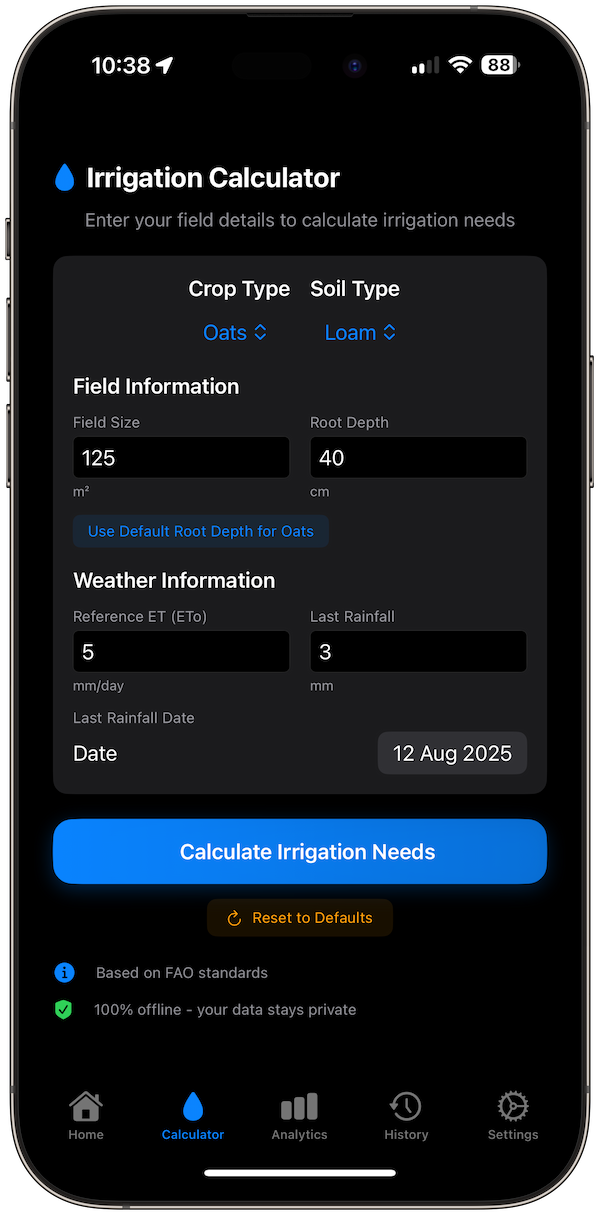
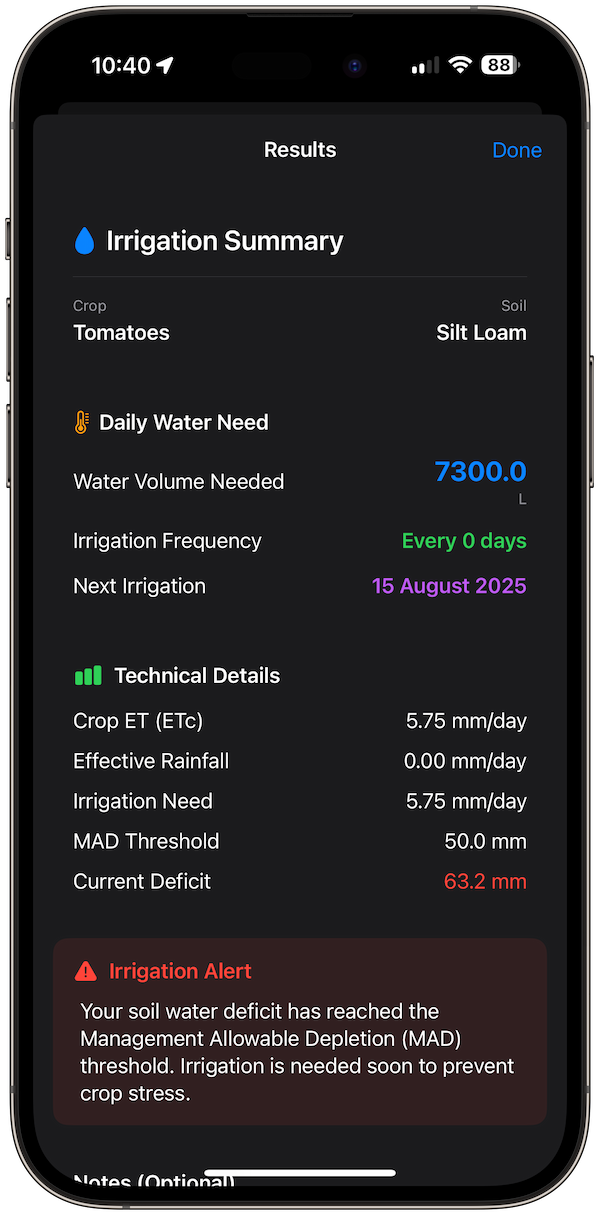
The app calculates daily water requirements, irrigation schedules, and system efficiency factors using FAO-56 methodology.
Built-in Crop Database
Access 15+ crops with FAO Kc values and default root depths, plus create custom crop profiles for specialized applications.
Soil Type Integration
Six standard soil types with specific water holding characteristics and management recommendations.
Seasonal Irrigation Planning
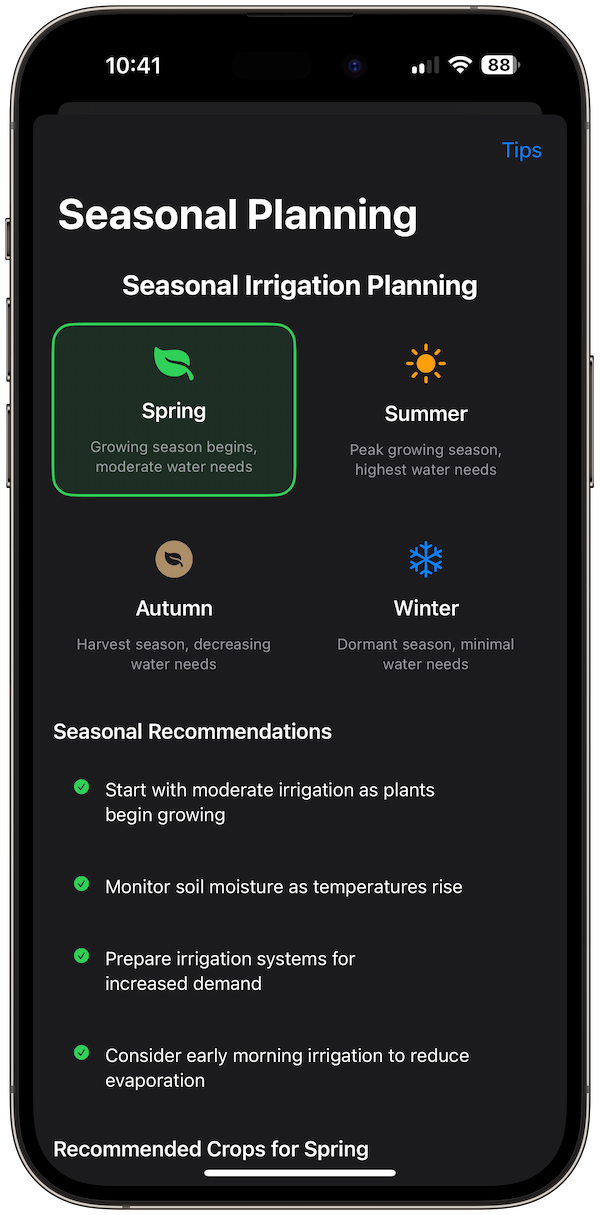
Effective irrigation requires planning for different seasons and weather conditions throughout the growing season.
Spring Planning
- Soil Preparation: Ensure adequate soil moisture for planting
- System Maintenance: Check and repair irrigation equipment
- Water Rights: Verify water availability and allocation
- Crop Selection: Choose crops appropriate for water availability
Summer Management
- Peak Demand: Highest water requirements during hot months
- Heat Stress: Additional water for temperature protection
- System Monitoring: Regular checks for efficiency and coverage
- Water Conservation: Optimize timing and application rates
Water Conservation Strategies
Sustainable irrigation practices help conserve water while maintaining crop productivity and profitability.
Precision Irrigation
- Soil Moisture Monitoring: Use sensors to determine irrigation timing
- Variable Rate Irrigation: Adjust application rates based on field variability
- Weather-Based Scheduling: Use weather forecasts for irrigation planning
- Deficit Irrigation: Strategic water stress during non-critical periods
Technology Integration
- Smart Controllers: Automated irrigation based on soil and weather data
- Remote Monitoring: Track system performance and water use
- Data Analytics: Analyze trends and optimize irrigation strategies
- Mobile Apps: Monitor and control irrigation from anywhere
Economic Considerations
Irrigation planning must balance water conservation with economic viability and crop productivity.
Cost-Benefit Analysis
- Water Costs: Pumping, treatment, and delivery expenses
- System Investment: Equipment, installation, and maintenance costs
- Yield Benefits: Increased production from adequate irrigation
- Risk Management: Protection against drought and water stress
Return on Investment
- Yield Increases: Quantify production benefits of irrigation
- Quality Improvements: Better crop quality and marketability
- Risk Reduction: Protection against weather variability
- Water Savings: Efficiency gains from precision irrigation
Environmental Impact
Sustainable irrigation practices protect water resources and maintain environmental quality for future generations.
Water Quality Protection
- Nutrient Management: Prevent fertilizer runoff and leaching
- Pesticide Application: Minimize chemical runoff through proper timing
- Erosion Control: Maintain soil structure and prevent sediment loss
- Wildlife Habitat: Consider environmental impacts of water use
Climate Adaptation
- Drought Resilience: Build systems that can handle water scarcity
- Flood Management: Design systems that can handle excess water
- Temperature Adaptation: Adjust irrigation for changing temperatures
- Seasonal Variability: Plan for changing precipitation patterns
Conclusion
Precision irrigation is essential for sustainable agriculture, requiring careful planning, efficient systems, and ongoing management. Irrigation Calculator Pro provides the tools and insights needed to implement effective water management strategies.
By understanding irrigation principles, using appropriate technology, and implementing sustainable practices, you can optimize water use while maintaining crop productivity and protecting environmental resources. The key is to balance technical requirements with economic and environmental considerations to achieve long-term success.