Nothing kills a game night faster than scoring arguments. You know the drill - someone miscounts, another player disputes the math, and suddenly everyone's checking their phones instead of playing cards.
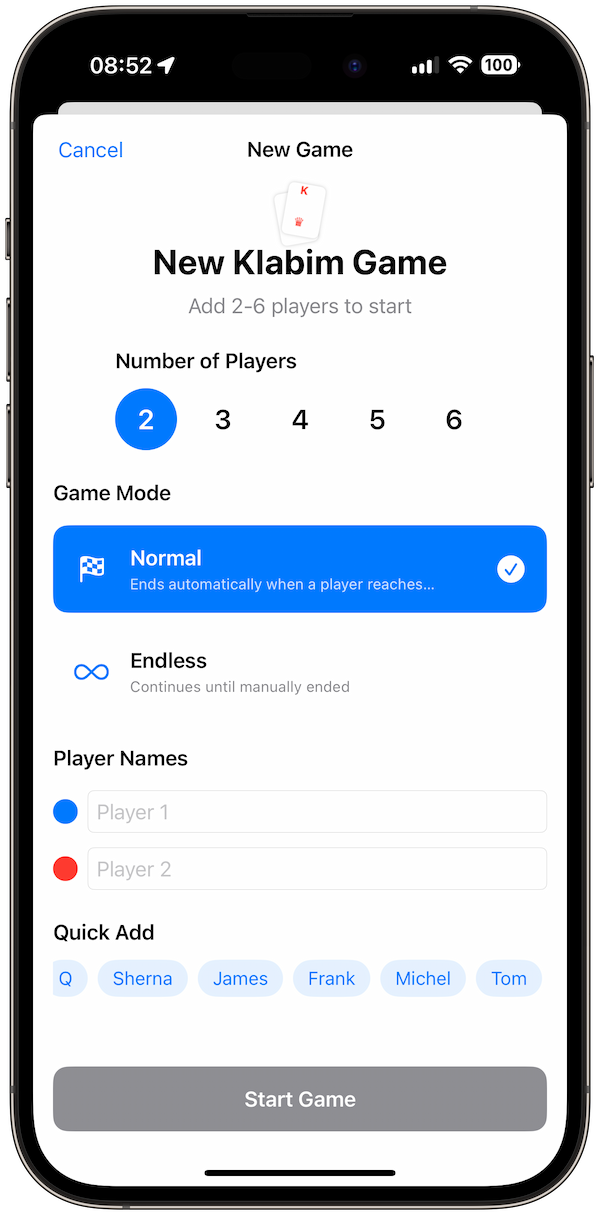
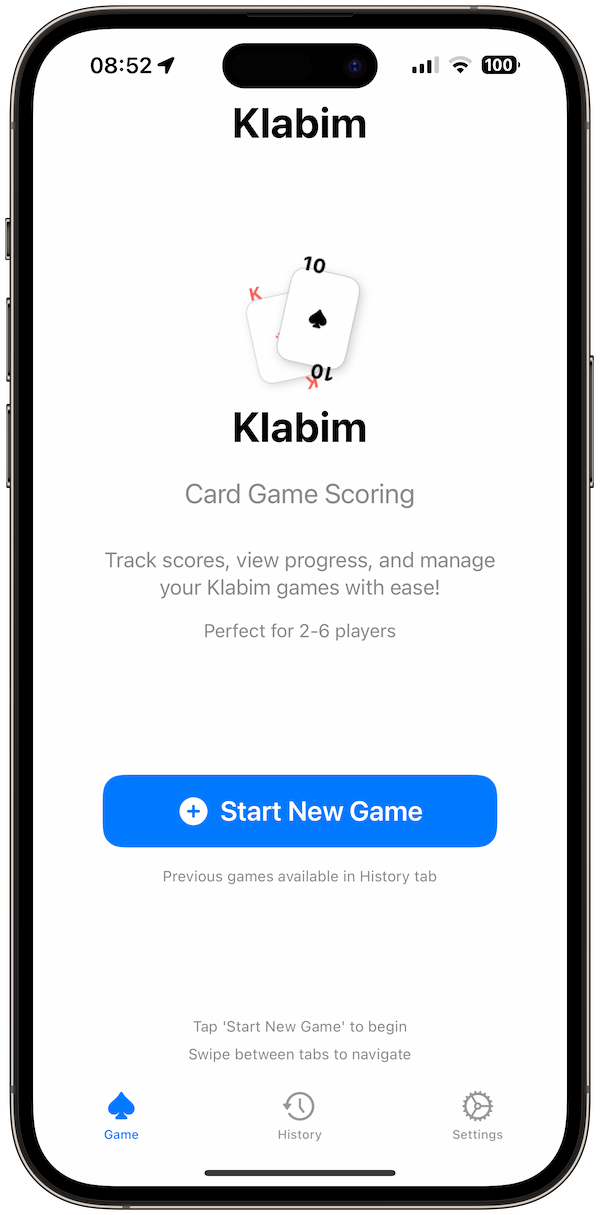
I've been using Klabim scorekeeper for my weekly card games, and it's eliminated those frustrating moments. Let me show you how to score the most popular card games properly, with real examples from actual games.
Why Card Game Scoring Matters
Every card game has its own scoring quirks. Hearts penalizes you for taking hearts, Spades rewards accurate bidding, and Euchre has that tricky "lone hand" bonus. Get the scoring wrong and you'll have confused players. Get it right and everyone can focus on strategy.
The key is understanding what each game actually rewards. Some games want you to avoid certain cards, others reward aggressive play, and partnership games add the complexity of coordinating with your teammate.
Hearts: The Classic Avoidance Game
Hearts is all about avoiding penalty cards. Each heart costs you 1 point, and the Queen of Spades is worth 13 points. The goal is to have the lowest score when someone hits 100 points.
Here's the catch: if you somehow manage to take ALL the hearts AND the Queen of Spades (called "shooting the moon"), everyone else gets 26 points and you get zero. It's risky but can completely change a game.
Example from last week's game: Sarah took 3 hearts and the Queen of Spades = 16 points. Mike took 2 hearts = 2 points. I took 1 heart = 1 point. Tom got lucky with 0 points. Sarah was not happy.
Spades: Where Bidding Meets Partnership
Spades is all about accurate bidding. You and your partner bid on how many tricks you think you can take, and you get 10 points per trick you bid. Make your bid and you're golden. Miss it and you lose 10 points per trick you bid.
The tricky part is overtricks - if you bid 4 tricks and take 5, you only get 1 extra point for that overtrick. But if you bid 4 and only take 3, you lose 40 points. It's brutal but fair.
Nil bids are the wild card: Bid zero tricks and make it, you get 100 points. Miss it and you lose 100 points. It's a high-risk, high-reward play that can swing games.
Real example: My team bid 4 tricks, made 5, so we got 41 points (40 for the bid + 1 overtrick). The other team bid 3, made 2, so they lost 30 points. That's a 71-point swing in one hand.
Euchre: The Midwest's Favorite
Euchre is all about trump cards and partnerships. First team to 10 points wins. You bid on how many tricks you can take with your partner, and the scoring is simple: 3-4 tricks gets you 1 point, 5 tricks gets you 2 points.
But here's where it gets interesting - if the bidding team gets "euchred" (takes fewer tricks than they bid), the defending team gets 2 points. And if someone goes "lone hand" (plays without their partner), they get 4 points for making it, or the other team gets 4 points if they fail.
Example from our game: We bid and made 5 tricks, so we got 2 points. The other team got nothing. We're now at 8 points, they're at 4. Two more points and we win.
Why I Use Klabim Scorekeeper
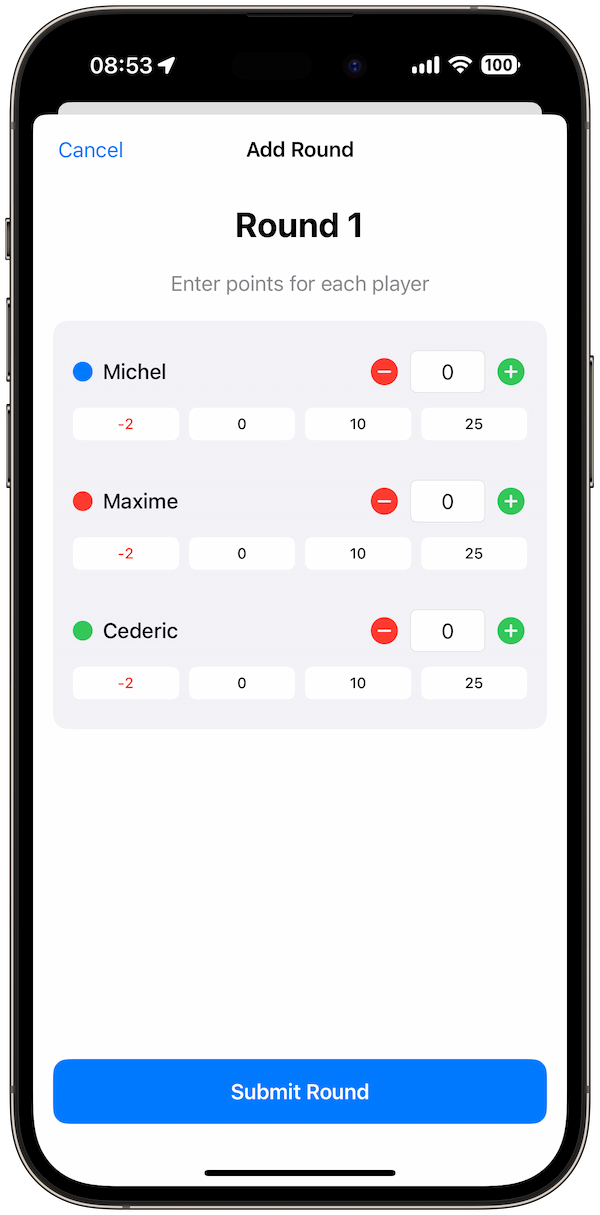
After years of arguing about scores and keeping track of complex calculations on paper, I finally found Klabim. It's got pre-loaded scoring for all the popular card games, so I don't have to remember if Hearts gives 1 point per heart or if Spades overtricks are worth 1 point each.
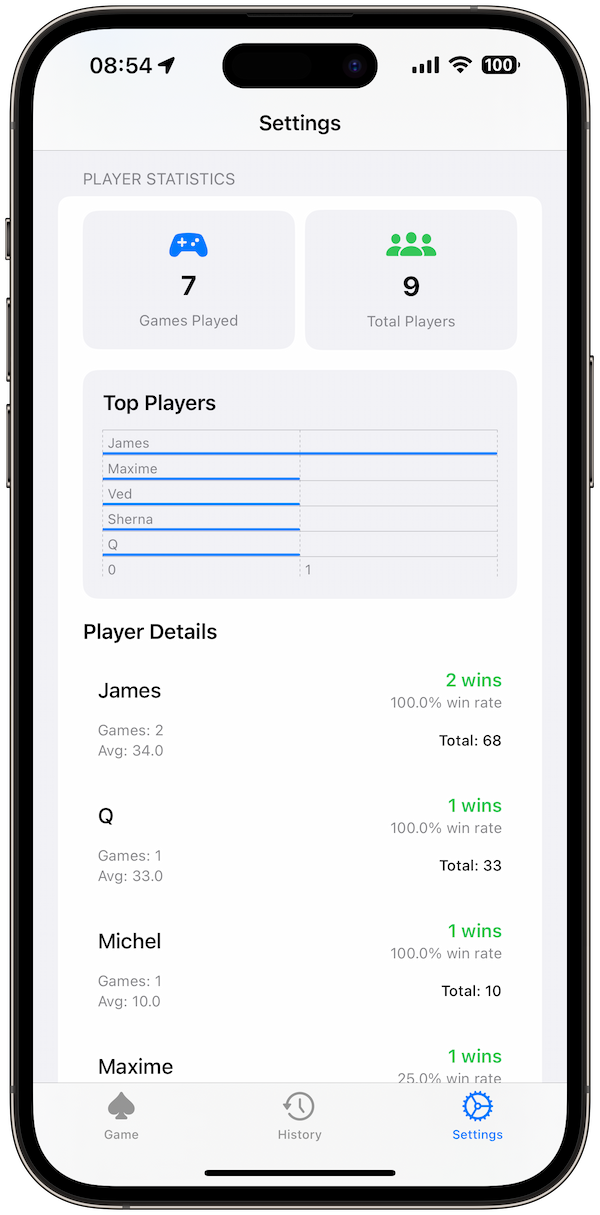
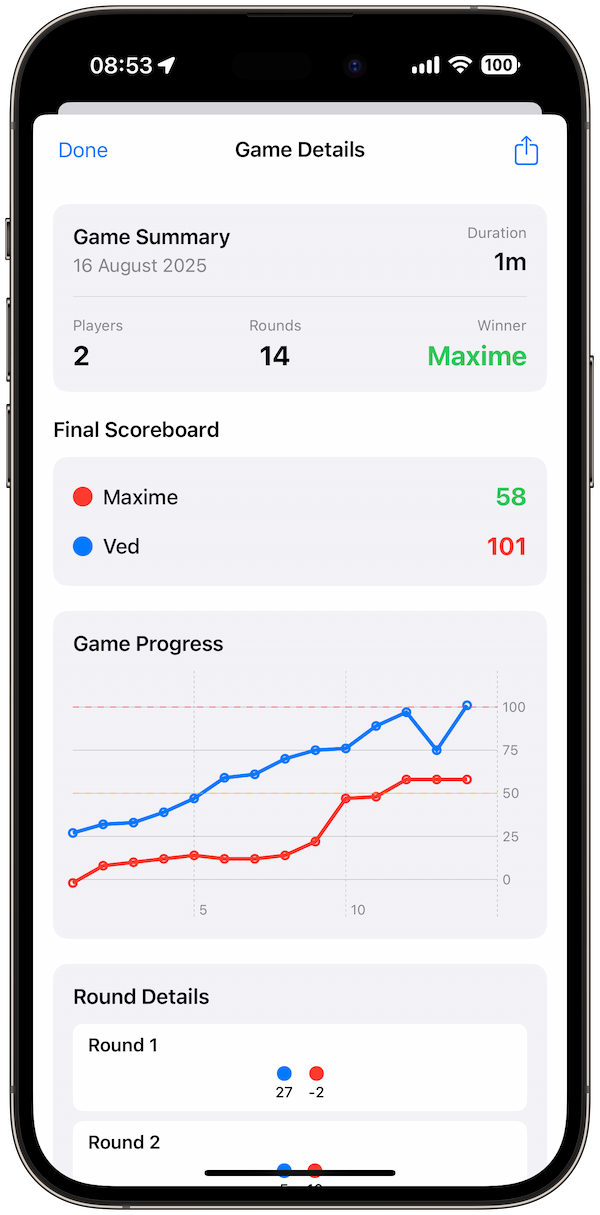
The best part is it tracks everything automatically. Who's winning, how many rounds we've played, and it even keeps stats on who wins the most. My friend Mike thinks he's the best Hearts player, but the stats show he's actually in third place.
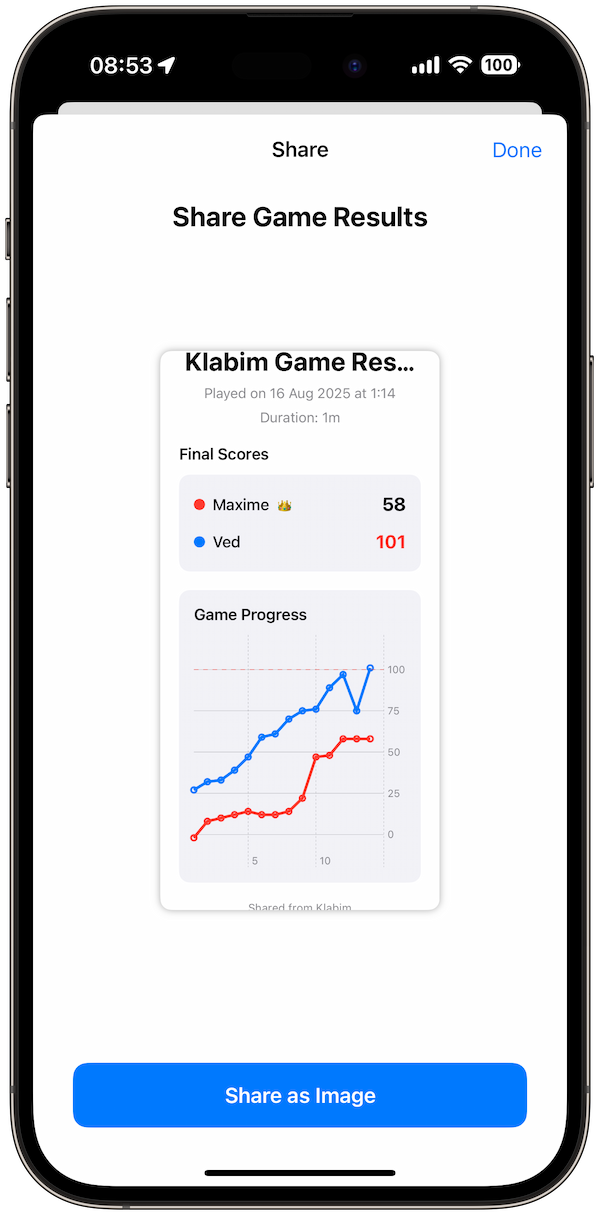
For tournaments, it handles brackets and elimination rounds. No more trying to figure out who plays who next - it just works. And it saves all our games so we can look back at that epic comeback from last month.
Tips for Smooth Scoring
Here's what I've learned from years of card games:
Announce everything clearly. Don't just say "I bid 3" - say "I bid 3 tricks" so everyone hears it. Write down the bids before play starts, especially in Spades where missing a bid costs you big points.
Don't let scoring kill the momentum. Set a timer if you have to, but don't spend 10 minutes arguing about whether someone took 4 or 5 tricks. Make a decision and move on.
Double-check the math. Especially in Hearts where you're adding up multiple penalty cards. One miscount can change the whole game.
Keep it fun. Scoring is just a tool to determine the winner. Don't let it become the focus of the game. The strategy and social aspect are what make card games great.
The bottom line: good scoring keeps the game moving and everyone happy. Bad scoring kills the fun and starts arguments. With the right system (and maybe an app to help), you can focus on what really matters - playing cards with friends.
If you're tired of keeping score on paper or arguing about math, give Klabim a try. It's made our game nights so much smoother, and we actually play more often now that scoring isn't a hassle.
References
- Pagat: Card Game Rules and Scoring
- Bicycle Cards: How to Play Card Games
- Card Game Heaven: Rules and Strategies
- American Contract Bridge League: Learn Bridge
Related Guides: Learn about tournament scoring with Klabim and team scoring strategies for professional results.