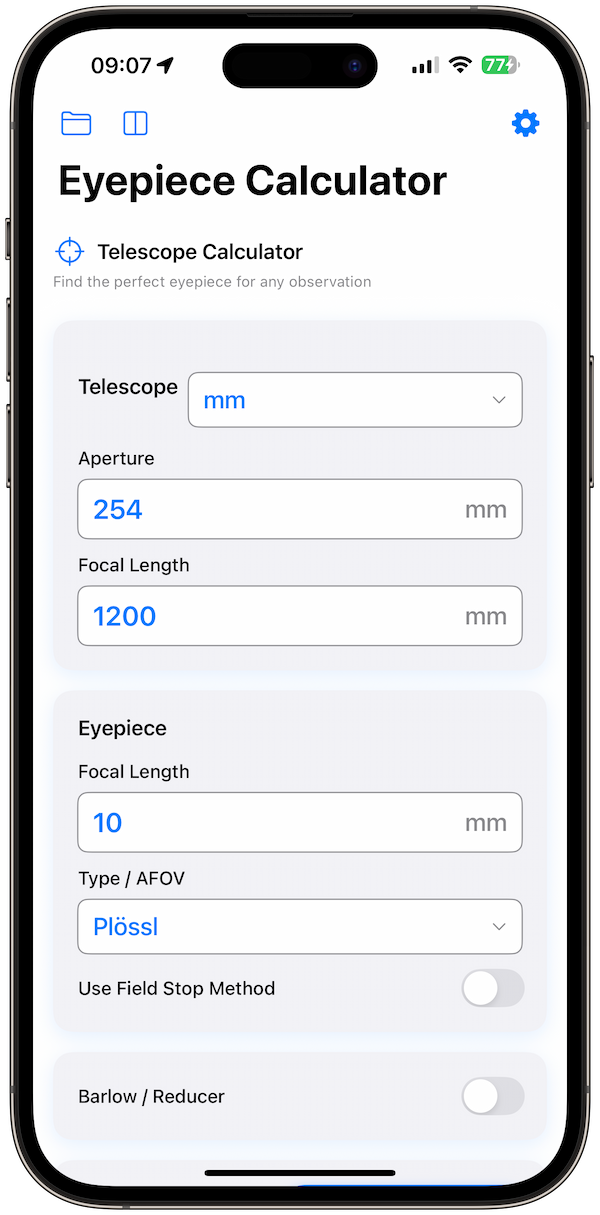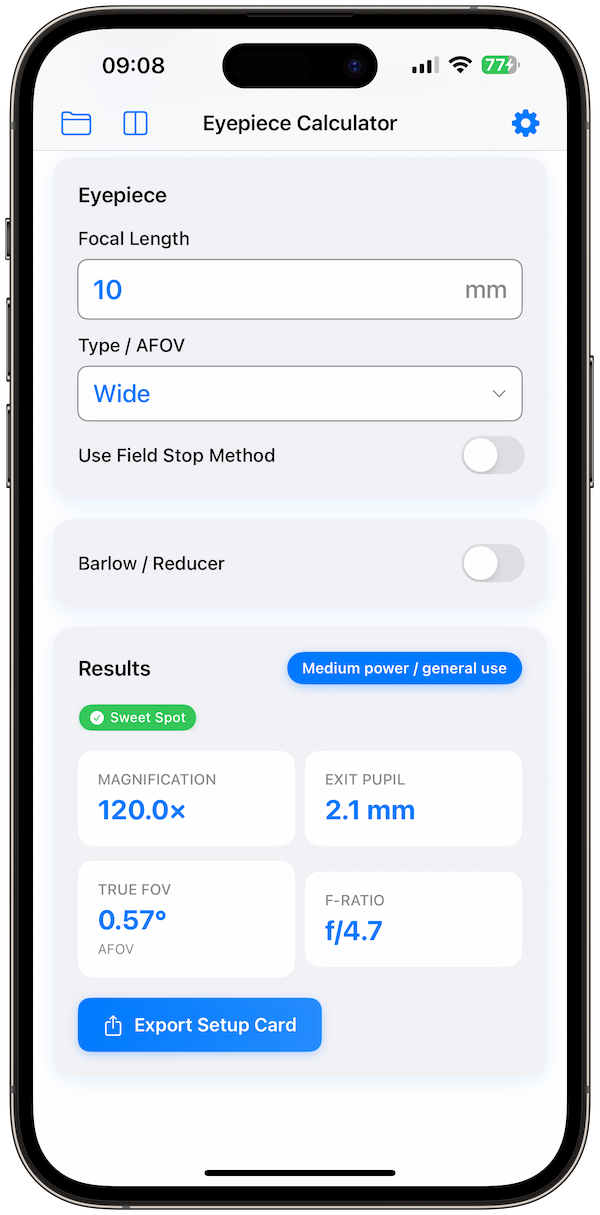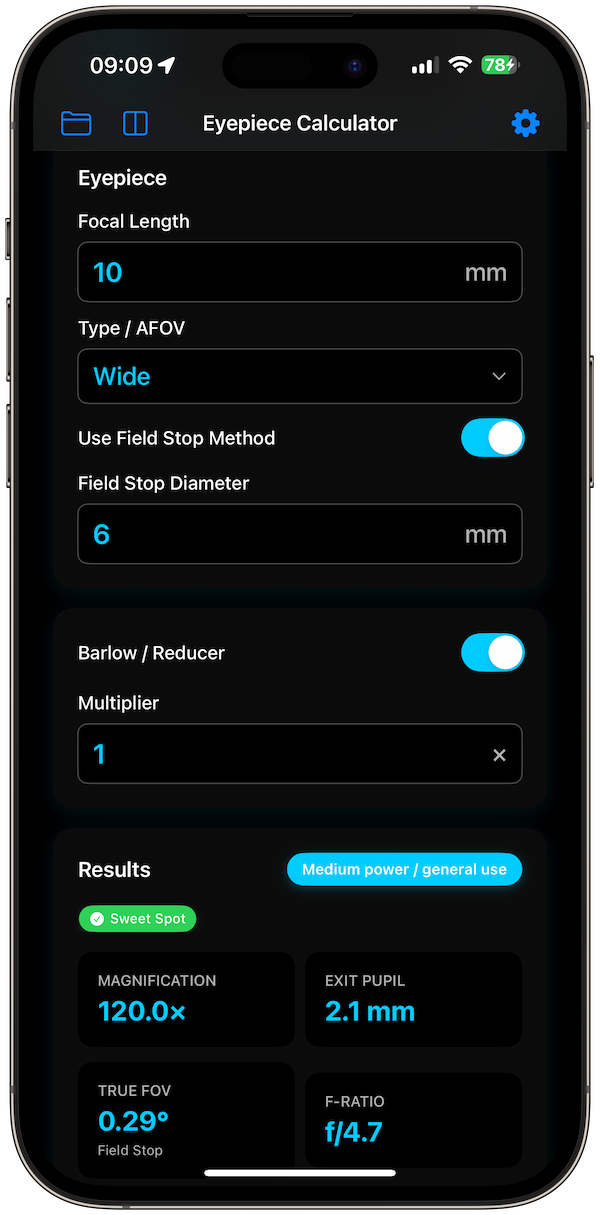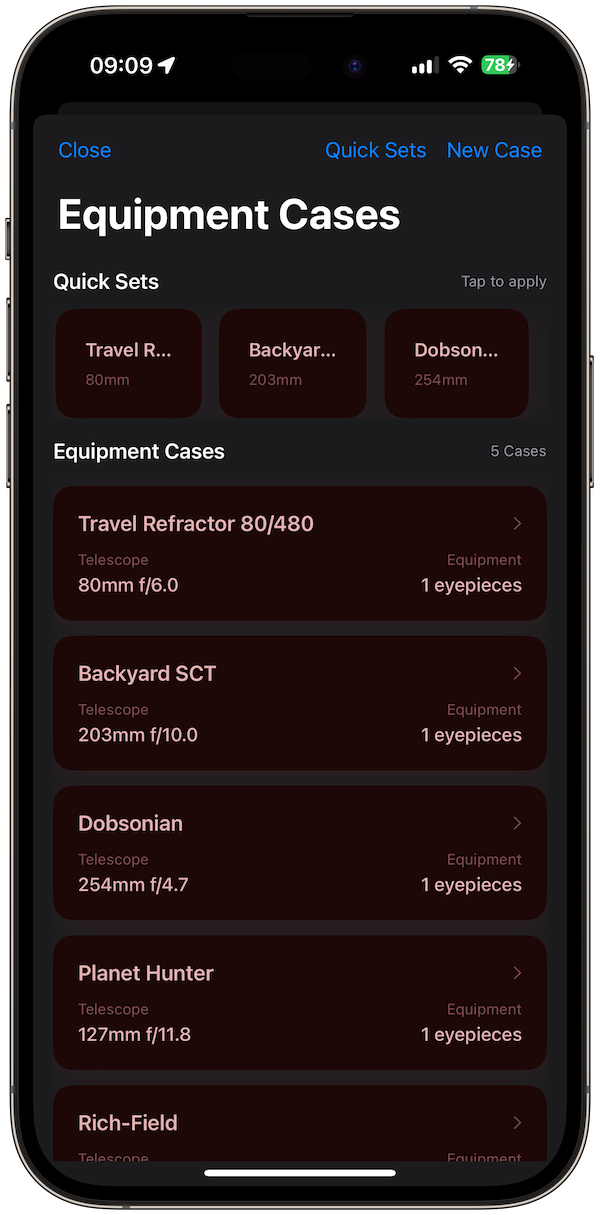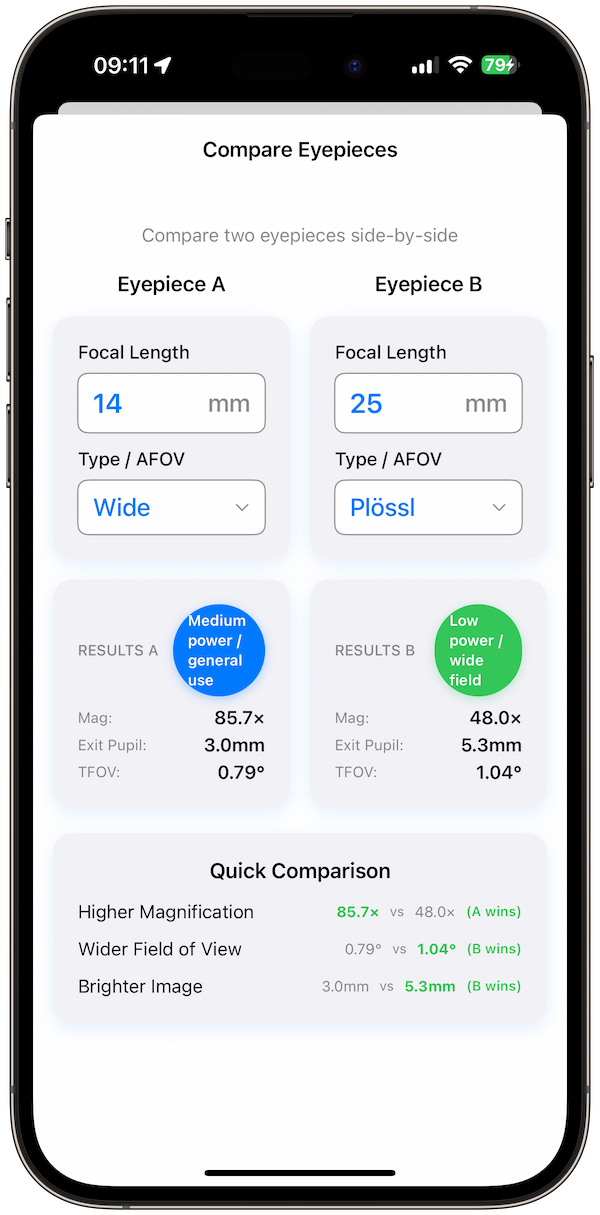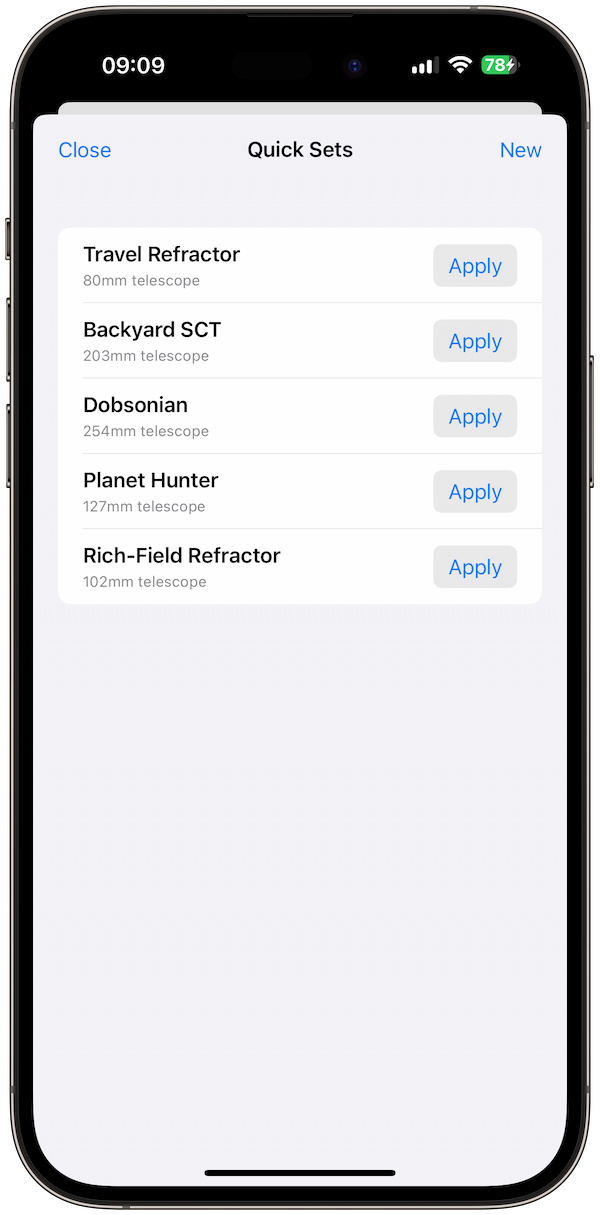
Astronomy is a science that combines wonder with precision, and choosing the right telescope eyepiece is crucial for optimal stargazing experiences. Whether you're observing planets, deep-sky objects, or the moon, understanding telescope optics and eyepiece calculations can dramatically improve your viewing experience. This comprehensive guide explores how Telescope Eyepiece Calculator simplifies complex optical calculations and helps you make informed decisions about your astronomy equipment.
Understanding Telescope Optics
Telescope optics involve several key parameters that determine what you can see and how clearly you can see it. Understanding these relationships is essential for choosing the right eyepiece for any observing session.
Key Optical Parameters
- Magnification: How much larger objects appear compared to the naked eye
- Exit Pupil: The size of the light beam exiting the eyepiece
- True Field of View (TFOV): The actual angular size of the sky visible through the eyepiece
- Focal Ratio (f-ratio): The relationship between focal length and aperture
Magnification: The Foundation of Telescope Viewing
Magnification determines how much detail you can see in celestial objects, but more magnification isn't always better.
Calculating Magnification
Magnification = Telescope Focal Length ÷ Eyepiece Focal Length
For example, a 1000mm focal length telescope with a 10mm eyepiece provides 100x magnification.
Optimal Magnification Ranges
- Low Power (20-50x): Wide field views, star clusters, nebulae
- Medium Power (50-150x): General planetary observation, double stars
- High Power (150-300x): Lunar details, planetary features, close double stars
- Very High Power (300x+): Only under excellent seeing conditions
Exit Pupil: Matching Your Eye
The exit pupil is the diameter of the light beam that enters your eye. This parameter is crucial for comfortable viewing and optimal light transmission.
Calculating Exit Pupil
Exit Pupil = Telescope Aperture ÷ Magnification
For a 200mm aperture telescope at 100x magnification, the exit pupil is 2mm.
Optimal Exit Pupil Sizes
- Young Eyes (7mm pupil): Exit pupils up to 7mm are useful
- Older Eyes (5-6mm pupil): Exit pupils above 6mm may be wasted
- Daylight Viewing: Smaller exit pupils (1-2mm) work well
- Deep Sky Objects: Larger exit pupils (4-7mm) gather more light
True Field of View: What You Can See
True Field of View (TFOV) determines how much of the sky you can see at once, which is crucial for finding objects and enjoying wide-field views.
Calculating True Field of View
TFOV = Eyepiece Apparent Field of View ÷ Magnification
A 50° apparent field eyepiece at 100x magnification provides a 0.5° true field of view.
Field of View Considerations
- Finding Objects: Wider fields make object location easier
- Context: Larger fields show objects in their surroundings Comfort: Wider fields provide more comfortable viewing
- Object Size: Some objects require specific field sizes for best views
Eyepiece Types and Their Characteristics
Different eyepiece designs offer various advantages and trade-offs. Understanding these differences helps you choose the right eyepiece for your needs.
Common Eyepiece Designs
- Plössl: Excellent image quality, moderate field of view (50°)
- Wide Angle: Larger field of view (60-70°), good for deep sky
- Ultra Wide Angle (UWA): Very wide fields (80°+), premium quality
- Hyper Wide: Extreme fields (100°+), premium price
- Orthoscopic: Excellent planetary views, narrow field (40-45°)
Choosing Eyepiece Focal Lengths
Most observers benefit from having 3-4 eyepieces covering different magnification ranges:
- Low Power: 25-40mm for wide field views
- Medium Power: 12-18mm for general observation
- High Power: 6-10mm for planetary details
- Very High Power: 3-5mm for maximum magnification
Barlow Lenses and Reducers
Barlow lenses and focal reducers modify your telescope's effective focal length, providing more magnification options without buying additional eyepieces.
Barlow Lenses
- 2x Barlow: Doubles magnification, halves exit pupil
- 3x Barlow: Triples magnification, reduces exit pupil
- Variable Barlow: Adjustable magnification
Focal Reducers
- 0.63x Reducer: Reduces focal length, increases field of view
- 0.8x Reducer: Moderate focal length reduction
- Coma Corrector: Reduces focal length while correcting coma
How Telescope Eyepiece Calculator Simplifies Planning
Telescope Eyepiece Calculator handles complex optical calculations automatically, helping you make informed decisions about your equipment.
Real-Time Calculations
The app calculates magnification, exit pupil, TFOV, and f-ratio instantly as you input different eyepiece and telescope combinations.
Power Category Badges
Visual indicators help you quickly identify whether an eyepiece provides low, medium, or high power for your telescope.
Equipment Cases
Save your telescope and eyepiece combinations for quick reference and comparison between different setups.
Observing Session Planning
Effective observing requires planning your eyepiece selection based on the objects you want to observe and the conditions you expect.
Planetary Observation
- Jupiter: 150-250x magnification for detail
- Saturn: 200-300x for ring details
- Mars: 200-400x during opposition
- Venus: 100-200x for phases
Deep Sky Objects
- Large Nebulae: Low power (20-50x) for context
- Planetary Nebulae: High power (150-300x) for detail
- Star Clusters: Medium power (50-150x) for resolution
- Galaxies: Low to medium power depending on size
Common Eyepiece Selection Mistakes
Even experienced observers can make mistakes when choosing eyepieces. Here are common pitfalls to avoid.
Over-Magnification
Using too much magnification reduces image brightness and can make objects harder to see, especially under poor seeing conditions.
Ignoring Exit Pupil
Eyepieces that create exit pupils larger than your eye's pupil diameter waste light and money.
Neglecting Field of View
Very narrow fields make finding objects difficult and can reduce the enjoyment of wide-field objects.
Advanced Techniques
Professional astronomers and advanced amateurs use sophisticated techniques to optimize their observing sessions.
Eyepiece Testing
Test eyepieces on known objects to evaluate their performance in your specific telescope and observing conditions.
Magnification Ladder
Create a systematic approach to magnification, using a series of eyepieces that provide logical progression in power.
Conditional Selection
Choose eyepieces based on seeing conditions, object type, and your specific telescope's characteristics.
Conclusion
Mastering telescope eyepiece selection is essential for maximizing your astronomy experience. Telescope Eyepiece Calculator provides the tools and insights needed to make informed decisions about your equipment and observing sessions.
By understanding optical principles, using the right tools, and planning your sessions carefully, you can enjoy clearer views, easier object location, and more satisfying observing experiences. The key is to balance magnification, field of view, and image brightness to match your observing goals and conditions.