If you're like most amateur astronomers, your eyepiece collection started with the two that came with your scope. Then you bought a 2x Barlow. Then a specialized Planetary eyepiece. Then a wide-field ""hand grenade.""
Suddenly, you have a problem. You have 6 eyepieces, 2 telescopes, and 3 Barlows. That's 36 possible combinations. Which one gives the best view of Jupiter? Which one frames M45 perfectly without cutting off the sisters?
The traditional solution is a spreadsheet. Rows of focal lengths, columns of magnifications. It's functional, but let's be honest: Spreadsheets kill the magic.
The Spreadsheet Trap
I used Excel for years. I had conditional formatting for exit pupils and complex formulas for TFOV. But spreadsheets have fatal flaws in the field:
The Basic Spreadsheet
| 10mm | 120x | 0.4° |
| 25mm | 48x | 1.1° |
| 32mm | 37x | 1.4° |
Static data. No context. "Is 1.1° enough for Pleiades?" You have to memorize the sizes.
The Visual Planner
Instant visual confirmation. You see the answer before you swap the gear.
What an Ideal Eyepiece Planner Should Do
A modern tool shouldn't just do math; it should help you categorize and make decisions.
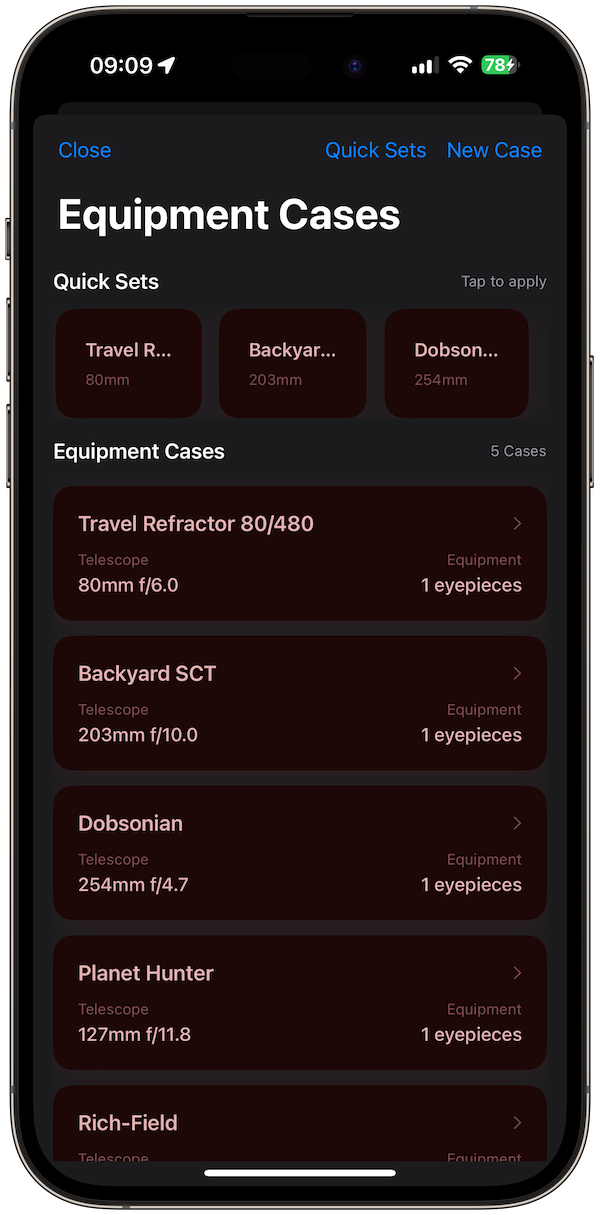
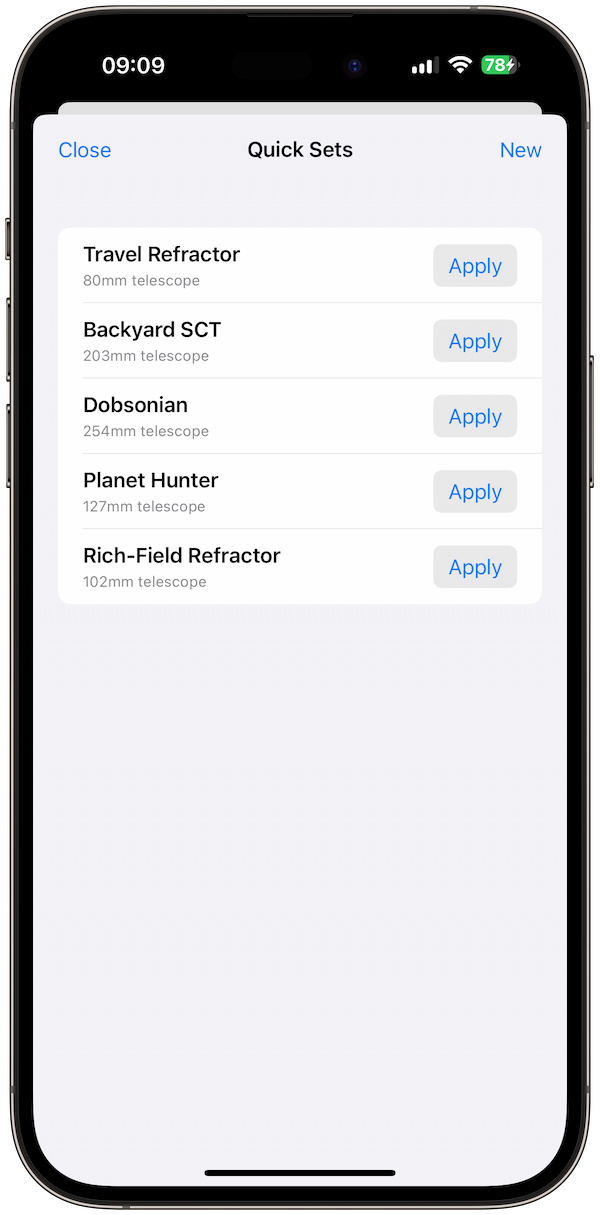
- Handle Multiple "Kits": You might use a different set of eyepieces for your travel refractor vs. your backyard light bucket.
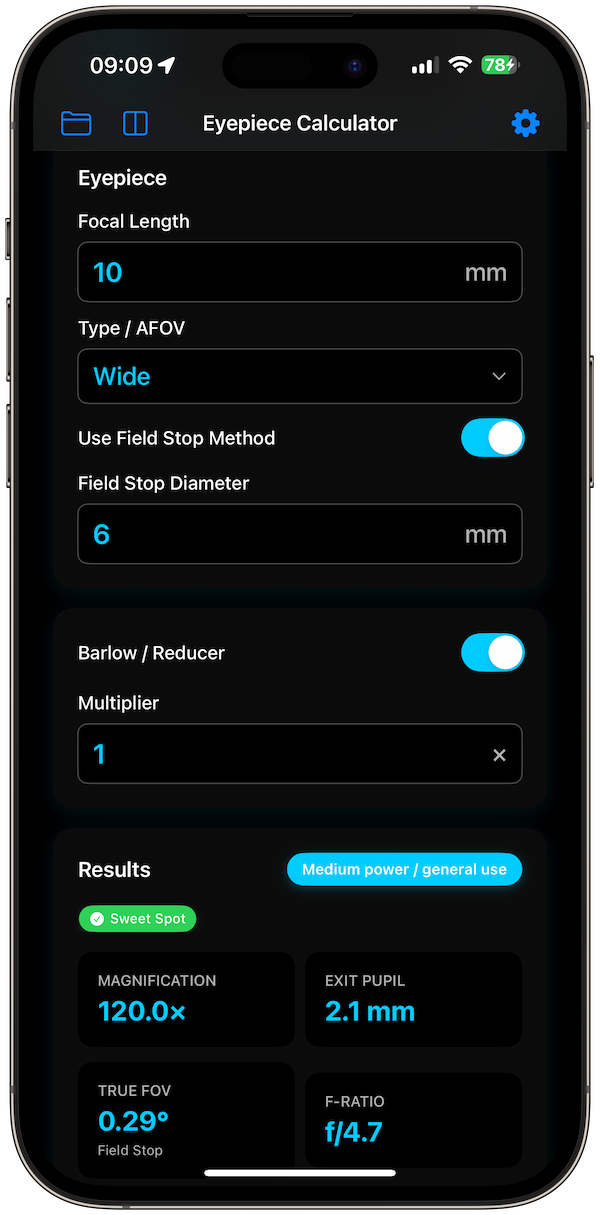
- Warn You of Bad Combos: If an eyepiece gives 600x magnification on a night with bad seeing, the app should flag it.
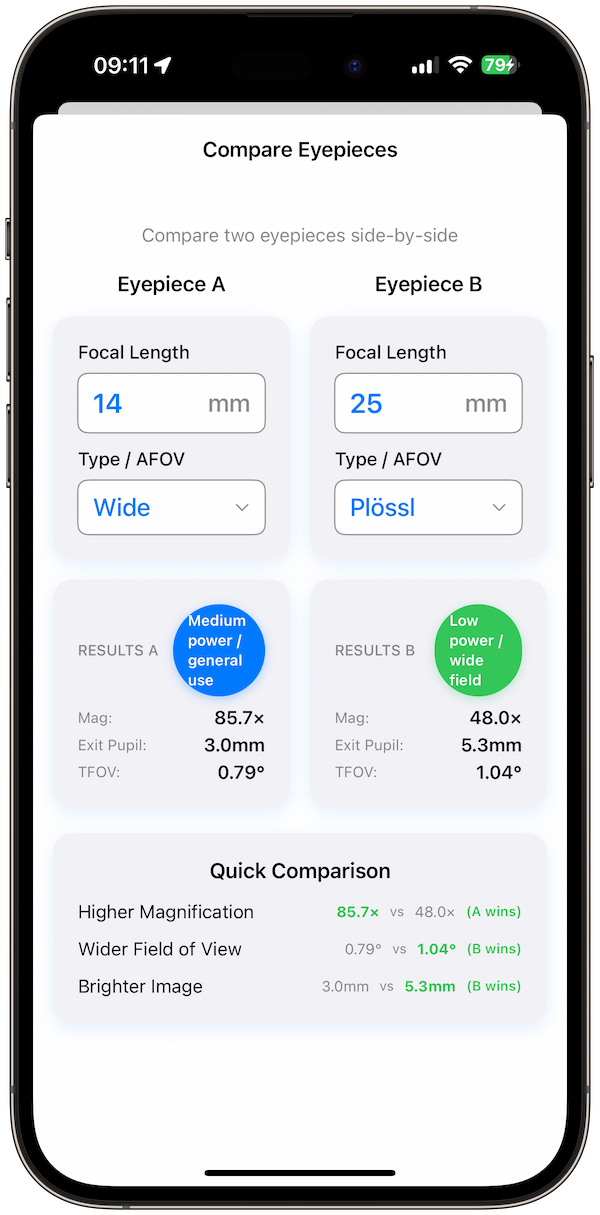
- Compare Options: It should let you put two eyepieces side-by-side to see which is better.
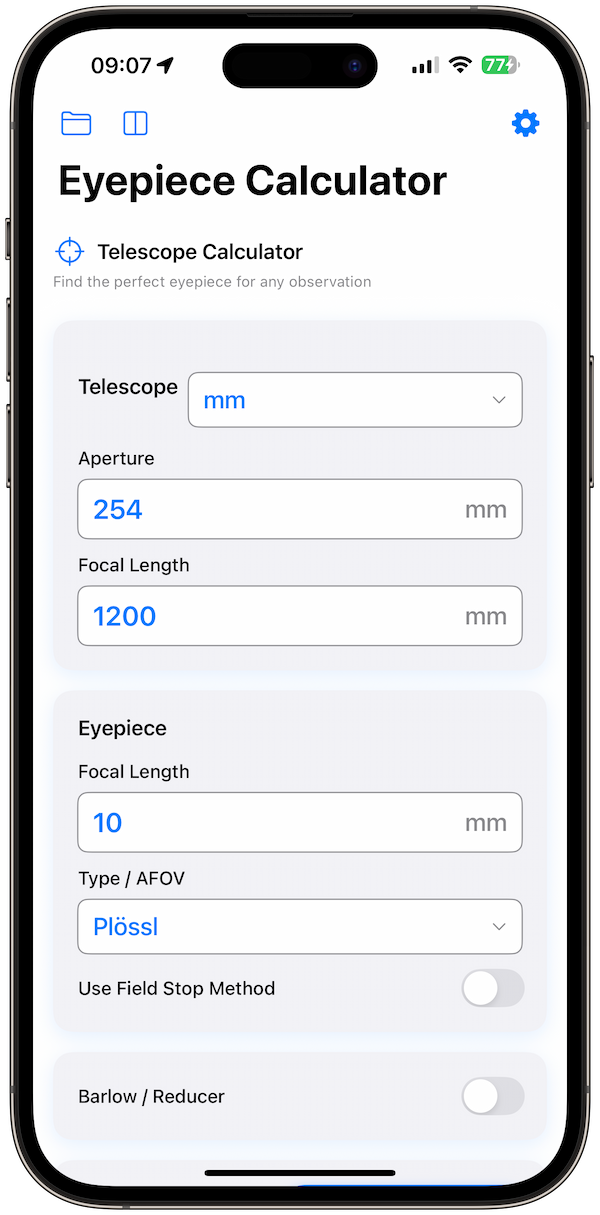
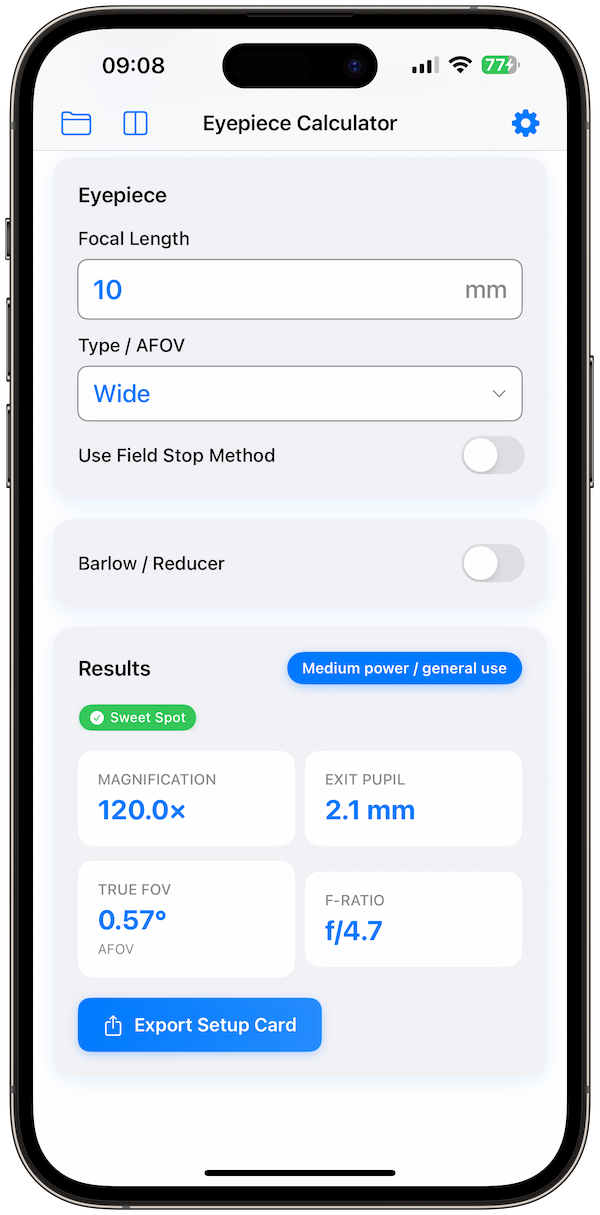
Enter: Telescope Eyepiece Calculator v1.2
We designed the Equipment Cases feature specifically to kill the spreadsheet. You can create unlimited cases—one for each telescope, or even for specific observing sites.
Feature Spotlight: The Comparison Tool
This is where the app leaves spreadsheets in the dust. In a spreadsheet, you compare numbers in two cells. In the app, we overlay the True Field of View (TFOV) of two eyepieces directly on top of each other.
Seeing that your new 82° eyepiece shows this much more sky than your old Plössl is often the "Lightbulb Moment" that justifies the upgrade.
/5 compare eyepieces FOV overlay.png)
Real World Examples
Scenario 1: The Outreach Night
You're showing the Moon to the public. You want the widest possible view so kids don't have to struggle to find the target. You open your "Outreach" case and instantly sort by "Max Field of View." Done.
Scenario 2: The Planetary hunter
Jupiter is at opposition. You want maximum power, but you don't want the exit pupil to drop below 0.5mm (where "floaters" become annoying). The app's Smart Hints highlight exactly which eyepiece hits that 0.7mm-1.0mm sweet spot for high-contrast planetary detail.
The Digital Setup Card
Once you've built your perfect kit, you can export it. The new PDF Export generates a clean, professional summary of your telescope's capabilities with every eyepiece you own. I keep a printed copy in my observer's chair—it's faster than any app or spreadsheet.
Conclusion
Spreadsheets are for taxes. Stars are for seeing. It's time to upgrade your planning tool to something that matches the beauty of the hobby.
Ditch the Spreadsheet
Get the visual planner designed for the field, not the office.
Download Telescope Eyepiece Calculator