Driving in fog and snow presents some of the most challenging conditions any motorist will face. Reduced visibility, slippery surfaces, and unpredictable weather patterns require specialized knowledge and preparation. This comprehensive guide will equip you with the essential skills and strategies needed to navigate these hazardous conditions safely.
Understanding Fog and Snow Conditions
Fog and snow create unique driving challenges that demand different approaches than normal weather conditions. Understanding these conditions is the first step toward safe navigation.
Types of Fog
Fog occurs when water vapor condenses near the ground, creating suspended water droplets that reduce visibility. There are several types of fog that drivers encounter:
- Radiation Fog: Forms on clear, cool nights when the ground loses heat rapidly
- Advection Fog: Develops when warm, moist air moves over cooler surfaces
- Upslope Fog: Forms when moist air is forced up sloping terrain
- Valley Fog: Common in low-lying areas where cold air settles
Snow Conditions and Their Impact
Snow creates multiple hazards beyond just reduced visibility:
- Fresh Snow: Provides better traction than packed snow but can hide road markings
- Packed Snow: Slippery surface that requires careful speed control
- Ice: The most dangerous condition, often invisible to drivers
- Slush: Wet snow that can cause hydroplaning
Essential Safety Equipment
Before venturing out in fog or snow, ensure your vehicle is properly equipped and maintained.
Vehicle Preparation
- Tires: Ensure adequate tread depth (minimum 4/32 inch) and proper inflation
- Lights: Clean all headlights, taillights, and turn signals
- Windshield: Replace worn wiper blades and ensure defroster works properly
- Fluids: Check antifreeze levels and use winter-grade windshield washer fluid
- Battery: Cold weather reduces battery capacity; ensure it's in good condition
Emergency Supplies
- Blankets or sleeping bags
- Extra warm clothing
- Non-perishable food and water
- Flashlight with extra batteries
- First aid kit
- Ice scraper and snow brush
- Jumper cables
- Sand or cat litter for traction
Driving Techniques for Fog
Fog requires specific driving techniques to maintain safety while maximizing visibility.
Speed and Following Distance
Reduce your speed significantly in fog conditions. The general rule is to drive at a speed that allows you to stop within the distance you can see ahead. Increase your following distance to at least 5-6 seconds behind the vehicle in front of you.
Safety Tip: Unsure if your following distance is safe? Use our free Stopping Distance Calculator to see exactly how much space you need on ice versus dry pavement.
Lighting Strategy
- Low Beams: Use low beams in fog; high beams reflect off water droplets and reduce visibility
- Fog Lights: If equipped, use front fog lights to illuminate the road surface
- Hazard Lights: Only use when stopped or moving very slowly
Navigation and Positioning
Stay in your lane and avoid changing lanes unless absolutely necessary. Use the right edge of the road or painted lane markings as a guide. If visibility becomes extremely poor, consider pulling over to a safe location and waiting for conditions to improve.
Driving Techniques for Snow
Snow driving requires smooth, deliberate actions and constant attention to road conditions.
Starting and Stopping
When starting from a stop on snow, apply gentle pressure to the accelerator to avoid wheel spin. For stopping, begin braking early and apply steady pressure. If your vehicle has anti-lock brakes (ABS), maintain firm pressure; if not, pump the brakes gently.
Steering and Cornering
Make smooth, gradual steering inputs. Avoid sudden movements that could cause your vehicle to lose traction. When cornering, slow down before the turn and accelerate gently through it.
Hill Driving
On uphill climbs, maintain steady momentum without excessive acceleration. For downhill descents, use engine braking by shifting to a lower gear, and avoid riding the brakes continuously.
How DriveSafe: Fog & Snow App Helps
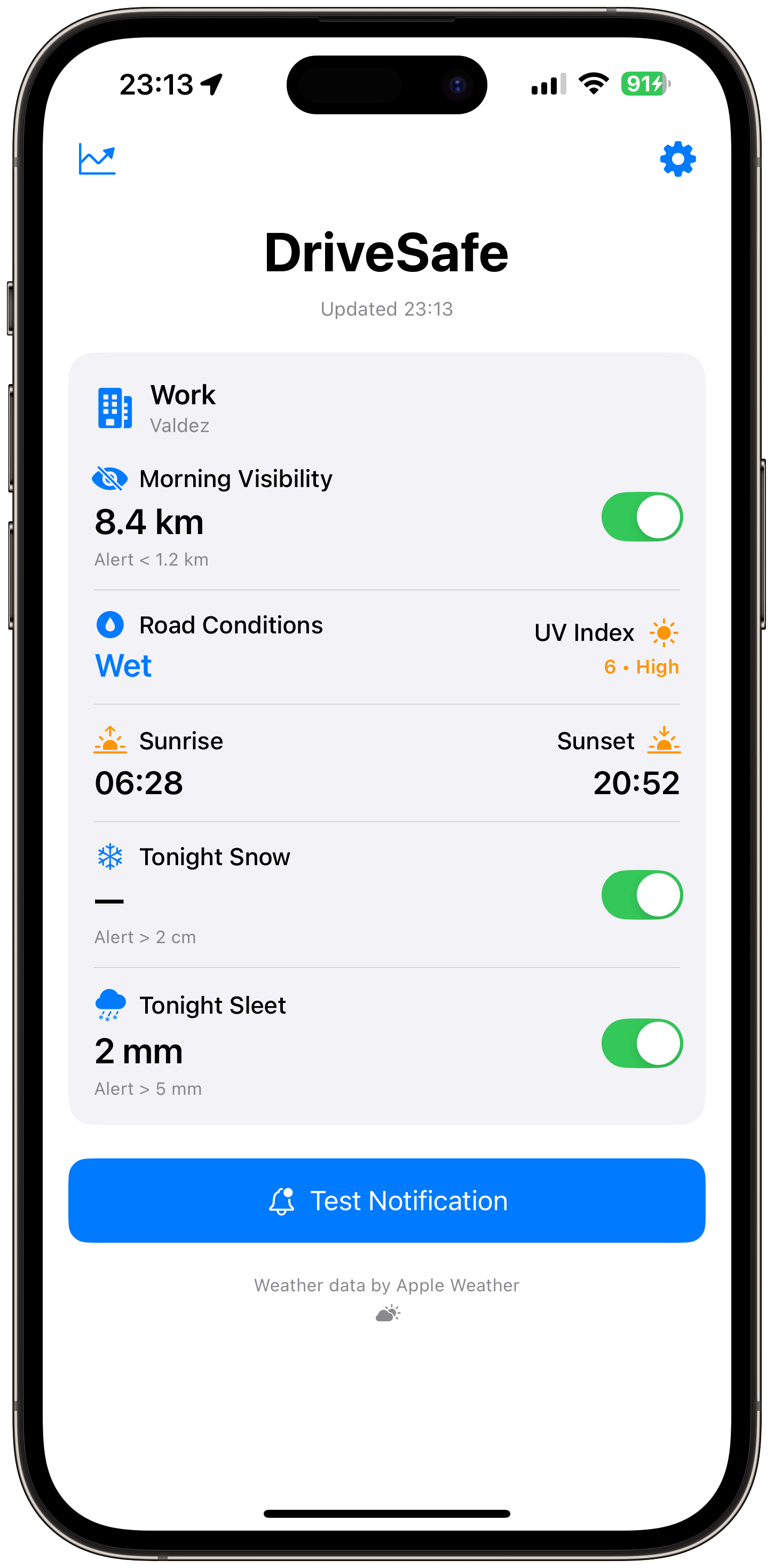
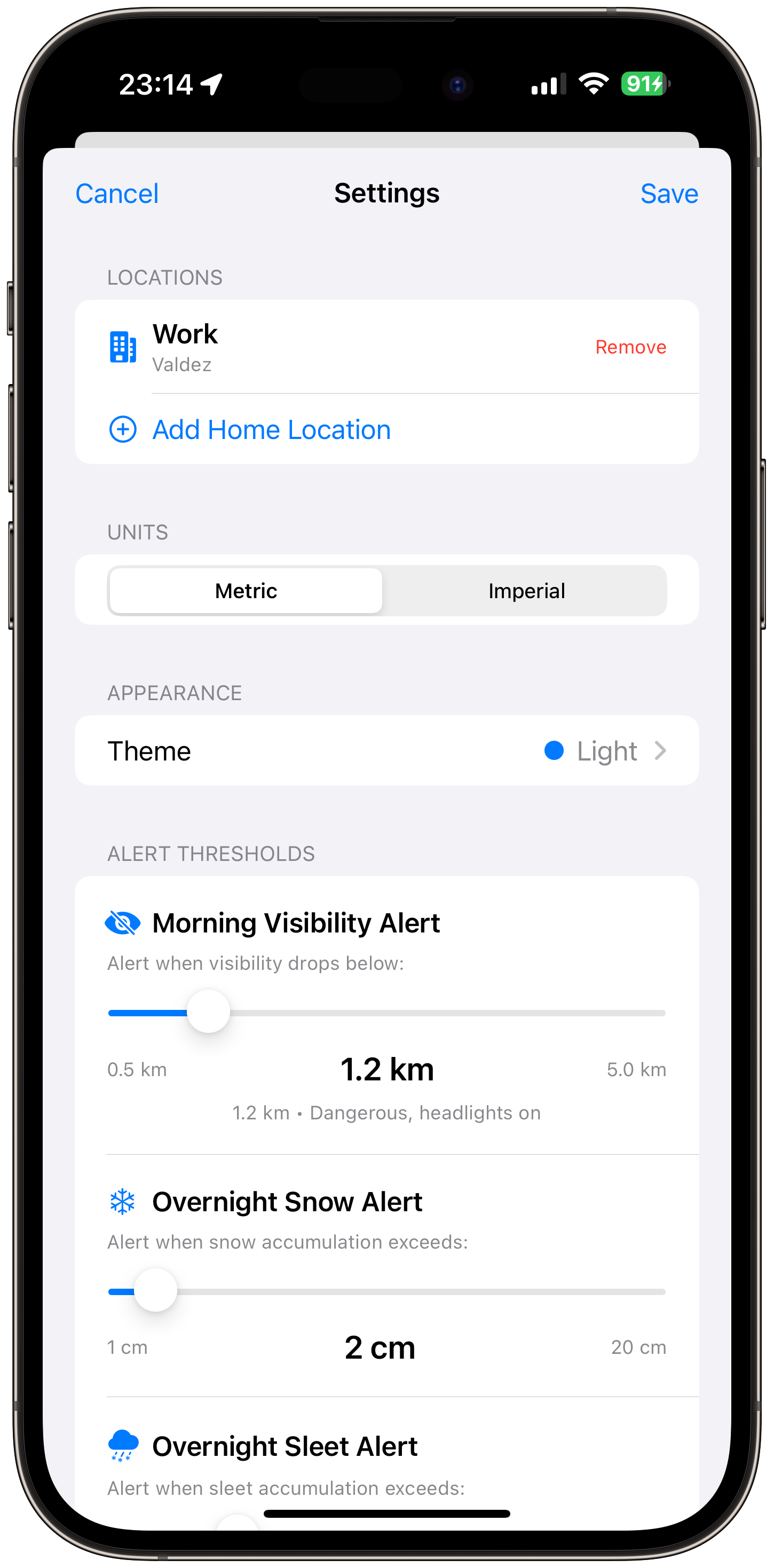
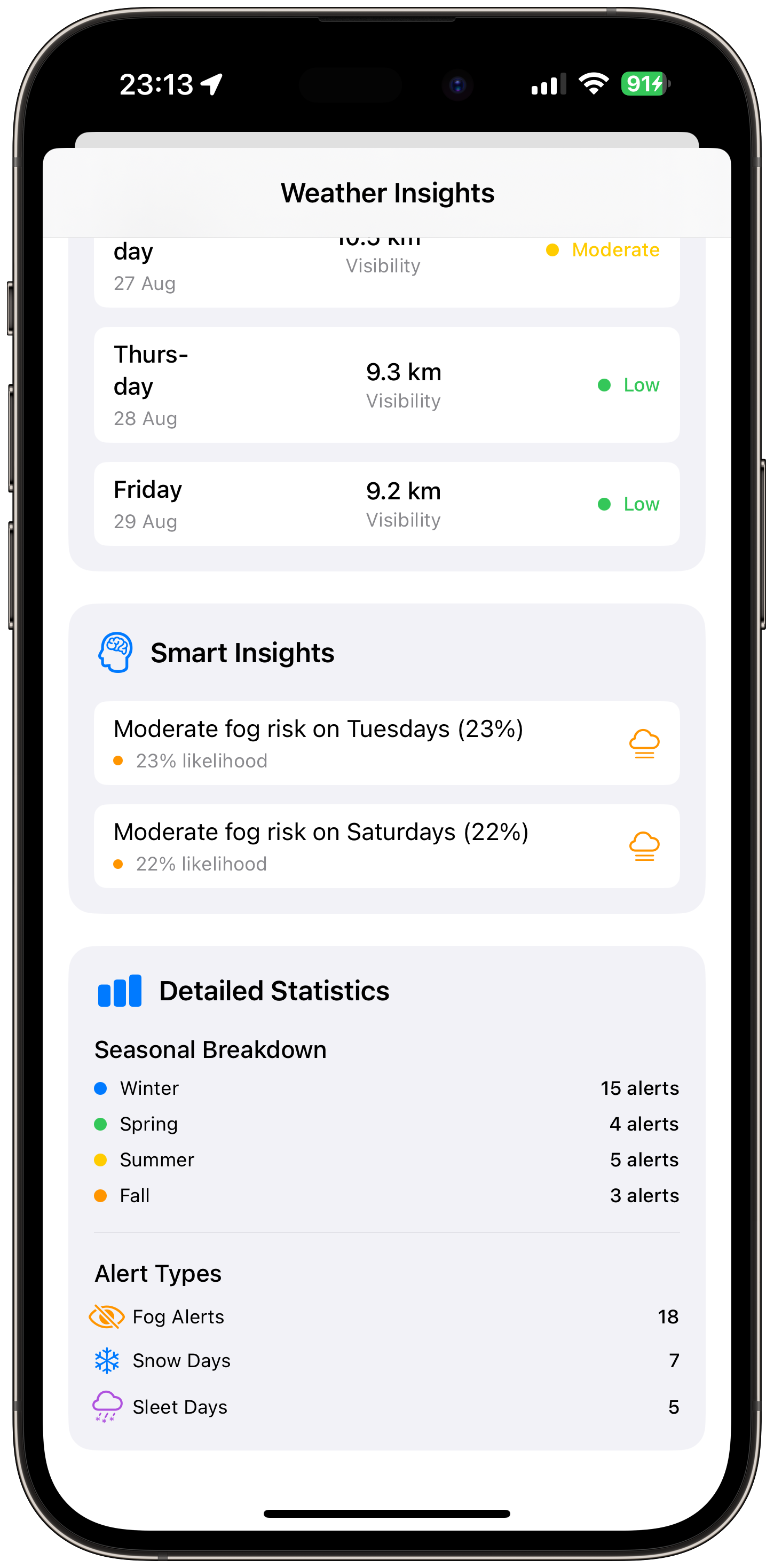
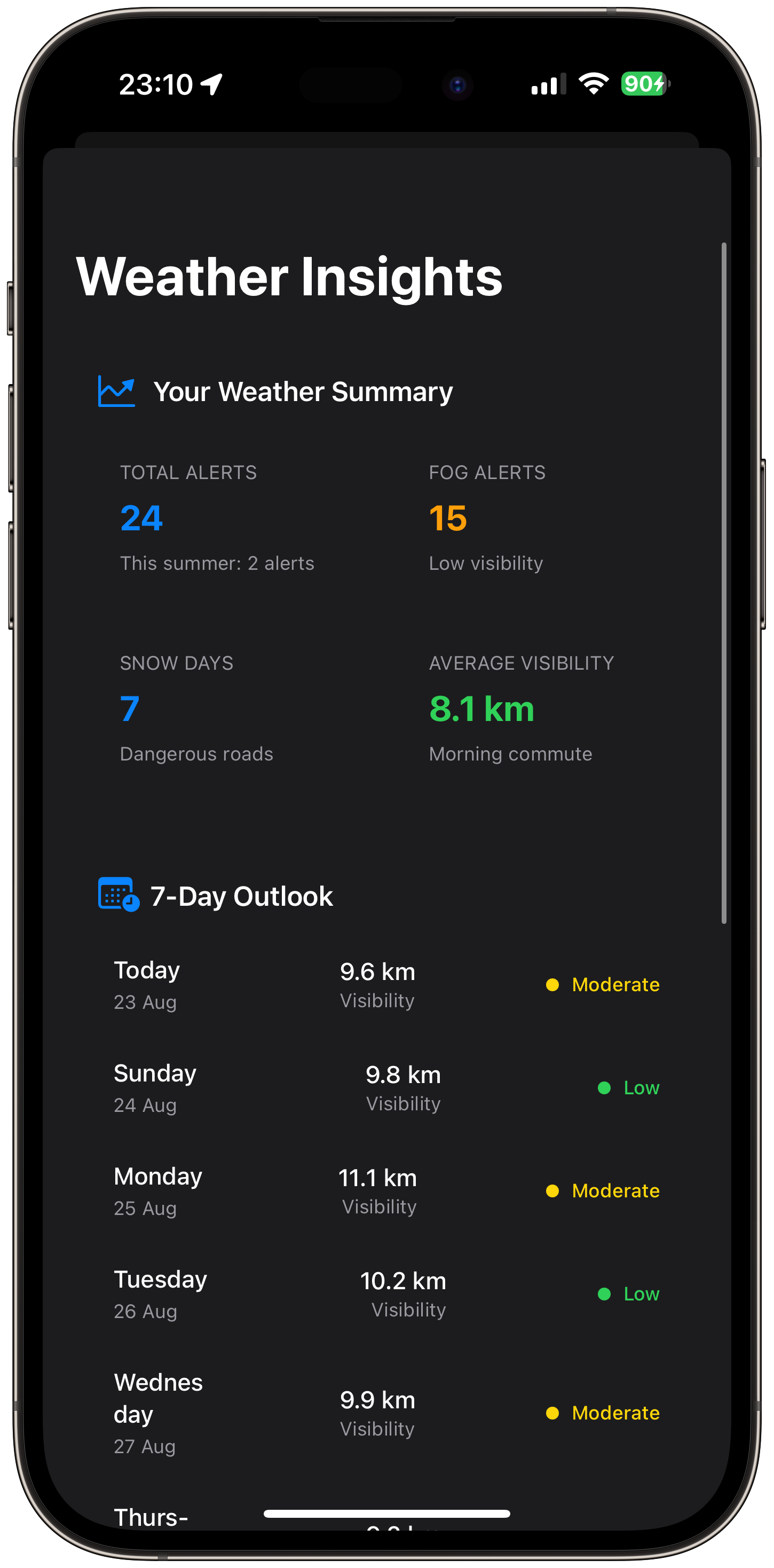
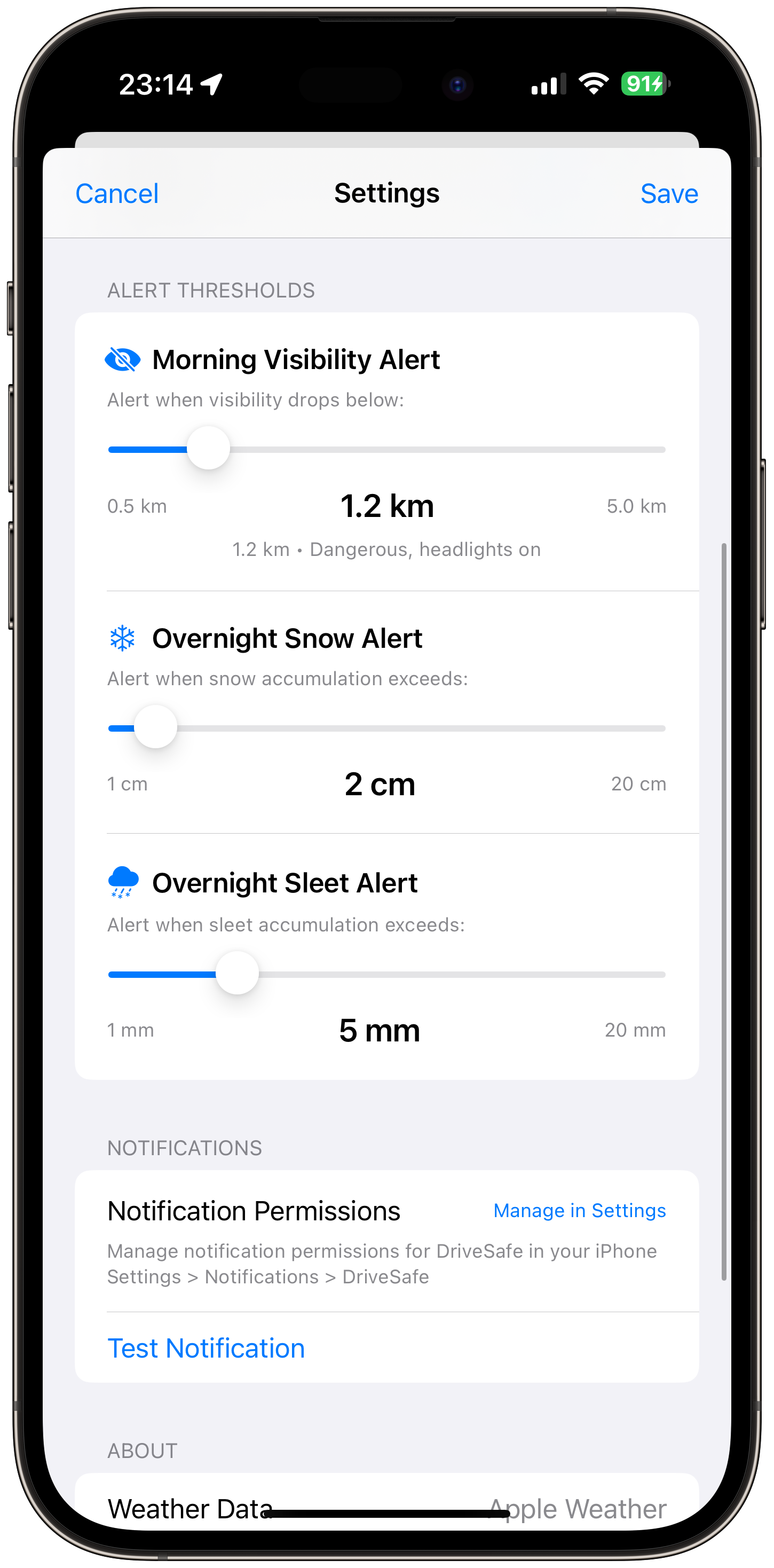
Modern technology can significantly enhance your safety when driving in challenging weather conditions. The DriveSafe: Fog & Snow app provides real-time assistance specifically designed for these hazardous conditions.
Real-Time Weather Alerts
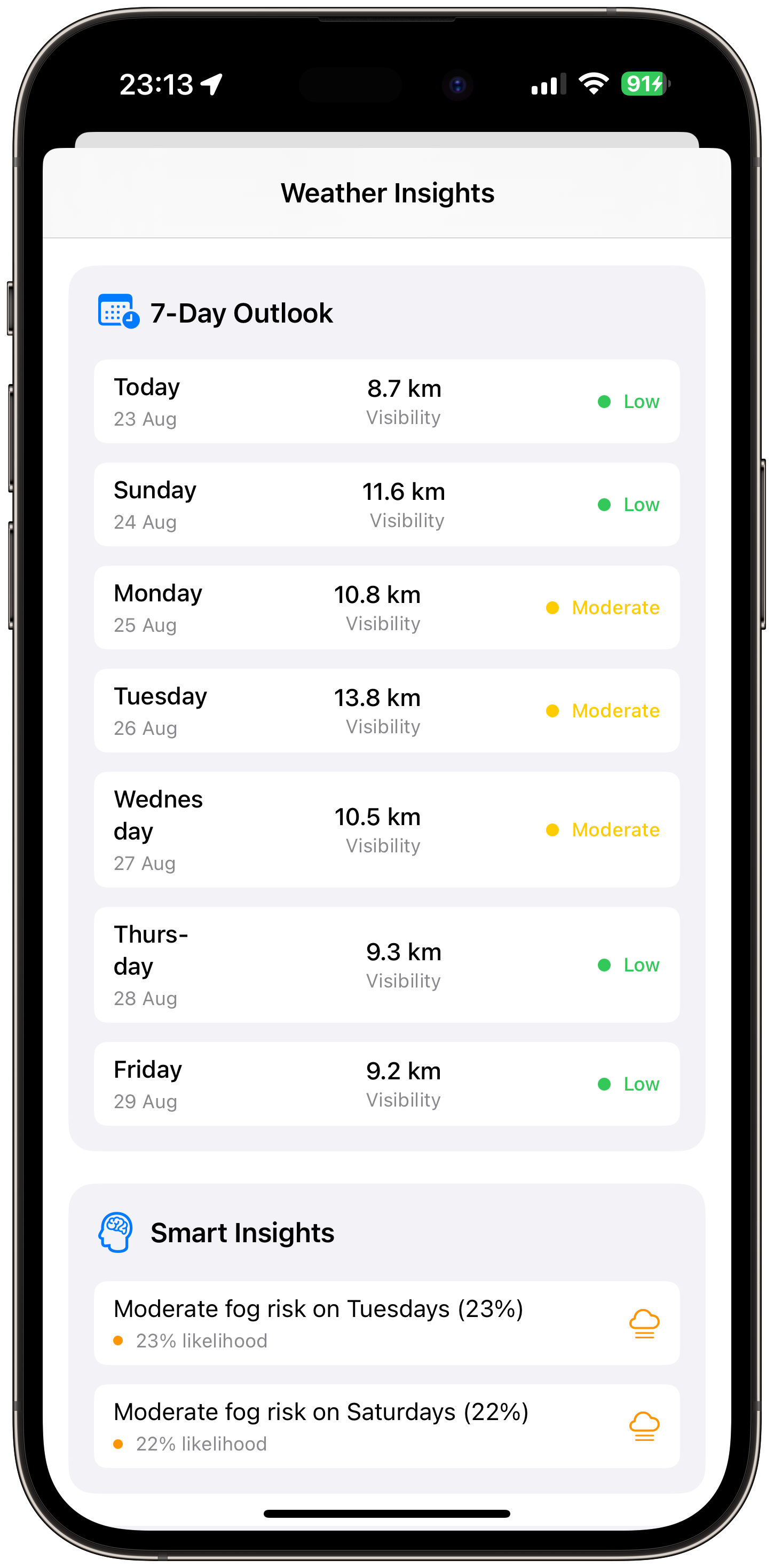
DriveSafe provides instant notifications about changing weather conditions along your route. The app monitors fog density, snow accumulation, and visibility levels, alerting you to potential hazards before you encounter them.
Visibility Tracking
The app's advanced visibility tracking feature helps you understand current conditions and make informed decisions about whether to continue driving or find a safe place to wait.
Route Safety Recommendations
DriveSafe analyzes your planned route and suggests safer alternatives when fog or snow conditions make your original path hazardous. The app considers factors like elevation changes, known problem areas, and current weather patterns.
Offline Map Support
Even when cell service is limited, DriveSafe continues to provide essential safety information through its offline map capabilities, ensuring you're never without critical navigation assistance.
Emergency Procedures
Despite all precautions, emergencies can still occur. Knowing how to respond can save lives.
If You Become Stranded
- Stay with your vehicle unless you can see a building within 100 yards
- Run the engine and heater for about 10 minutes each hour to conserve fuel
- Keep a window slightly open to prevent carbon monoxide buildup
- Make your vehicle visible by tying a bright cloth to the antenna
- Use your cell phone to call for help, but conserve battery power
If You Skid
- Take your foot off the accelerator
- Steer in the direction you want to go
- Don't brake suddenly; apply gentle pressure
- If you have ABS, maintain firm, steady pressure on the brake pedal
Pre-Trip Planning
Proper planning can help you avoid dangerous conditions altogether.
Weather Monitoring
Check weather forecasts and road conditions before departing. Use DriveSafe's weather monitoring features to get real-time updates about conditions along your route.
Route Selection
Choose routes that are well-maintained and frequently traveled. Avoid mountain passes, rural roads, and areas known for poor weather conditions when possible.
Timing Considerations
If possible, delay your trip until conditions improve. If you must travel, allow extra time and inform others of your planned route and expected arrival time.
Conclusion
Driving safely in fog and snow requires preparation, knowledge, and the right tools. By understanding the conditions, preparing your vehicle, and using appropriate driving techniques, you can significantly reduce your risk of accidents. The DriveSafe: Fog & Snow app provides modern technological assistance to complement these traditional safety measures, giving you real-time information and alerts to help navigate challenging weather conditions safely.
Remember, no destination is worth risking your life. When in doubt, find a safe place to wait until conditions improve. Your safety and the safety of others on the road should always be your top priority.