One of the first things astronomers learn is how to calculate the magnification of their telescope. Magnification determines how large celestial objects appear through the eyepiece and directly influences what you can see. But many beginners get stuck asking: "Which eyepiece gives me the right magnification?"
In this article, we'll explain the magnification formula, give worked examples, and show how Telescope Eyepiece Calculator Pro does the math instantly, while also warning you about over- or under-magnification.
The Magnification Formula
The formula for telescope magnification is straightforward:
Magnification (M) = Telescope Focal Length ÷ Eyepiece Focal Length
But applying this formula correctly requires understanding your telescope's specifications and choosing the right eyepiece for your observing goals.
Key Components
- Telescope focal length (mm): A property of the telescope's optics, usually listed in its manual
- Eyepiece focal length (mm): Marked on the eyepiece (e.g., 25 mm, 10 mm)
- Result: How many times larger objects appear compared to the naked eye
Example 1: Basic Magnification Calculation
Let's calculate magnification for a common beginner setup:
- Telescope: 1000 mm focal length
- Eyepiece: 25 mm focal length
Step-by-Step Calculation
Step 1: Identify the focal lengths
Telescope focal length = 1000 mm
Eyepiece focal length = 25 mm
Step 2: Apply the formula
M = 1000 ÷ 25 = 40×
Result: You'll see objects at 40× their apparent size
Example 2: Higher Magnification
Using the same telescope with a shorter focal length eyepiece:
- Telescope: 1000 mm focal length
- Eyepiece: 10 mm focal length
Calculation Process
Magnification: 1000 ÷ 10 = 100×
Result: Higher magnification, better for the Moon or planets, but with a narrower field of view
Example 3: With Barlow Lens
Adding a 2× Barlow lens doubles the effective focal length:
- Telescope: 1000 mm focal length
- Barlow: 2× multiplier
- Eyepiece: 25 mm focal length
Calculation Process
Step 1: Calculate effective focal length
1000 mm × 2 = 2000 mm
Step 2: Calculate magnification
M = 2000 ÷ 25 = 80×
Result: The 2× Barlow doubles your magnification from 40× to 80×
Recommended Magnification Ranges
While it's tempting to push magnification as high as possible, practical limits are set by atmospheric seeing and telescope aperture.
Optimal Magnification Guidelines
- Low Power (20× - 50×): Wide fields, star clusters, nebulae
- Medium Power (50× - 150×): General purpose, planets, the Moon
- High Power (150× - 300×): Double stars, planetary details, small targets
- Very High Power (300×+): Only under excellent seeing conditions
Maximum Useful Magnification
A common rule of thumb: Maximum useful magnification ≈ 2× aperture (in mm)
Example: A 100 mm refractor → ~200× maximum
Exit Pupil Considerations
The exit pupil is the diameter of the light beam that enters your eye. This parameter is crucial for comfortable viewing.
Exit Pupil Formula
Exit Pupil = Telescope Aperture ÷ Magnification
Example Calculation
For a 200mm aperture telescope at 100× magnification:
Exit Pupil = 200 ÷ 100 = 2 mm
Optimal Exit Pupil Sizes
- Young Eyes (7mm pupil): Exit pupils up to 7mm are useful
- Older Eyes (5-6mm pupil): Exit pupils above 6mm may be wasted
- Daylight Viewing: Smaller exit pupils (1-2mm) work well
- Deep Sky Objects: Larger exit pupils (4-7mm) gather more light
Common Magnification Mistakes
- Over-magnification: Using too much power reduces image brightness and can make objects harder to see
- Ignoring exit pupil: Eyepieces that create exit pupils larger than your eye's pupil diameter waste light
- Neglecting field of view: Very narrow fields make finding objects difficult
- Wrong eyepiece selection: Not matching eyepiece to observing goals
How Telescope Eyepiece Calculator Pro Makes It Easy
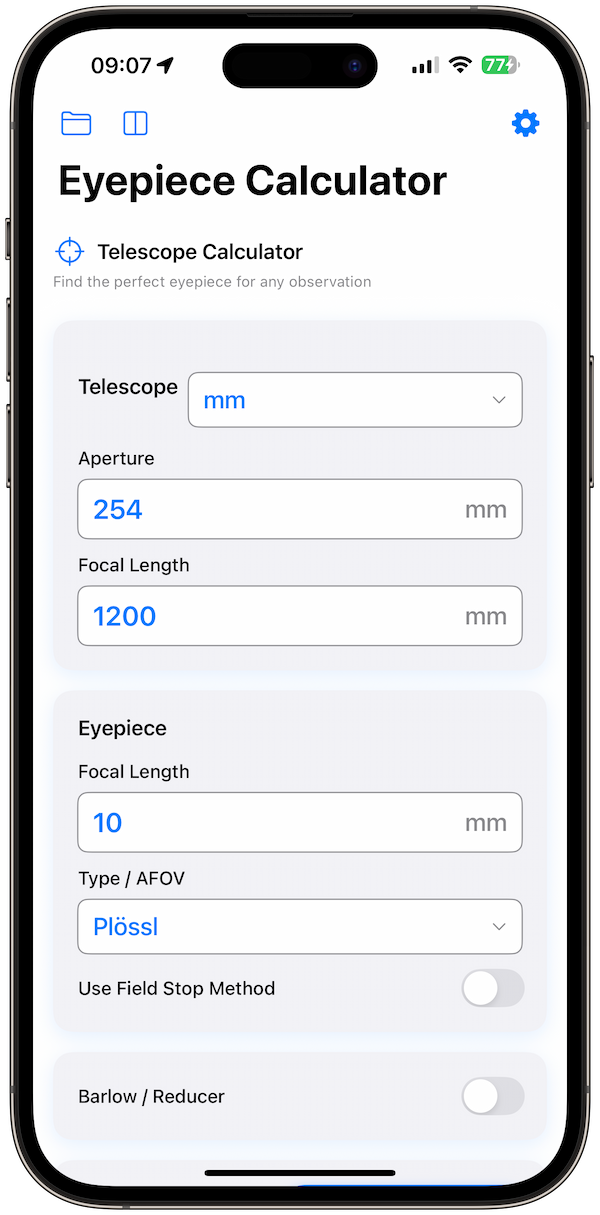
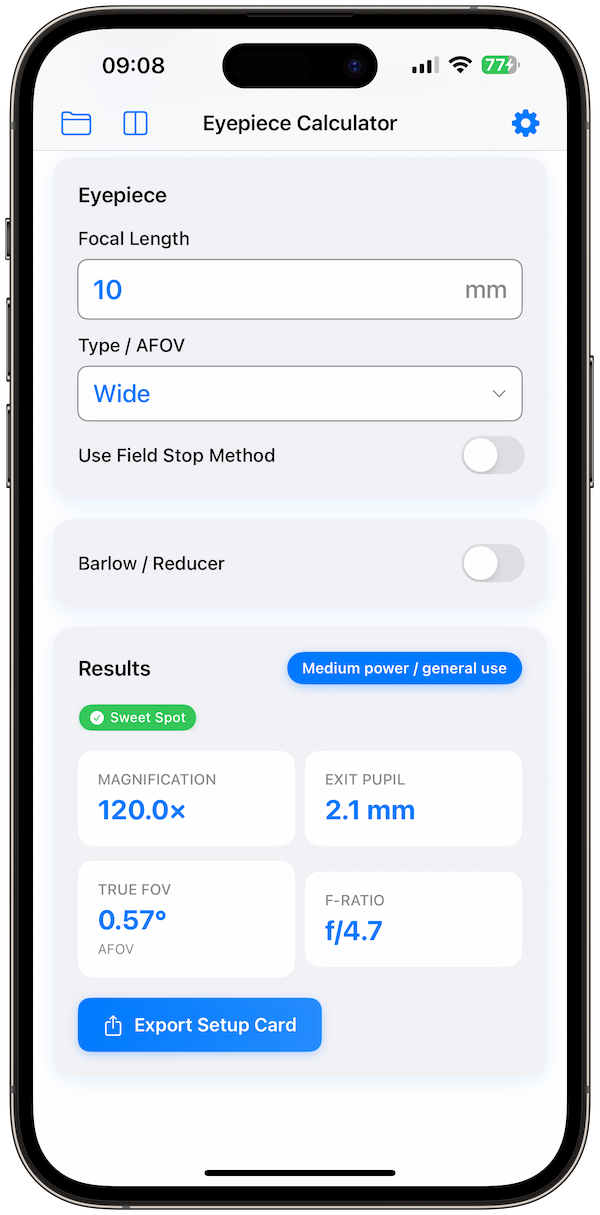
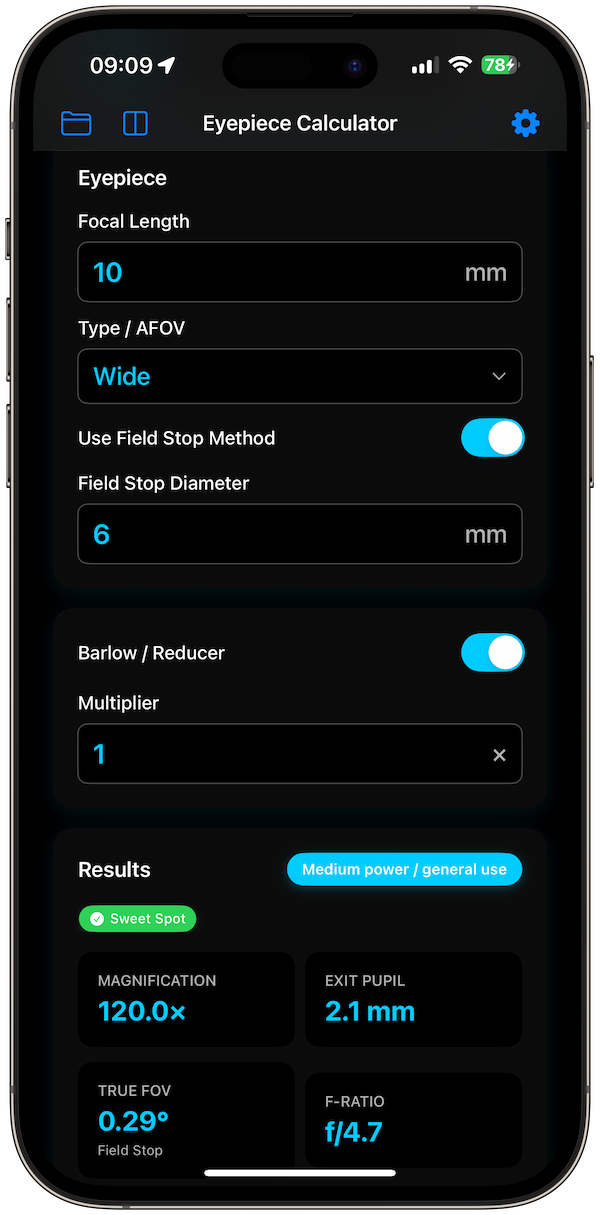
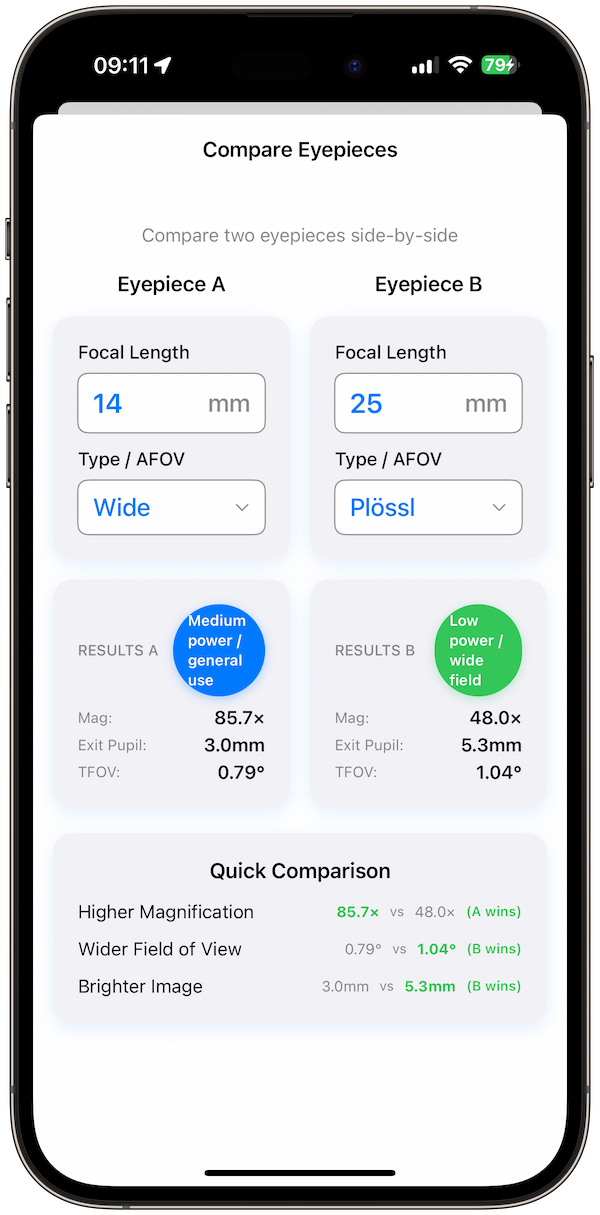
Instead of doing math on paper, Telescope Eyepiece Calculator Pro calculates magnification live as you type:
- Enter telescope specs: Focal length + aperture → choose eyepiece focal length
- See results instantly: Magnification, exit pupil, and TFOV calculated automatically
- Add accessories: Barlow or reducer multipliers with a single tap
- Power category badges: Visual indicators for Low/Medium/High power ranges
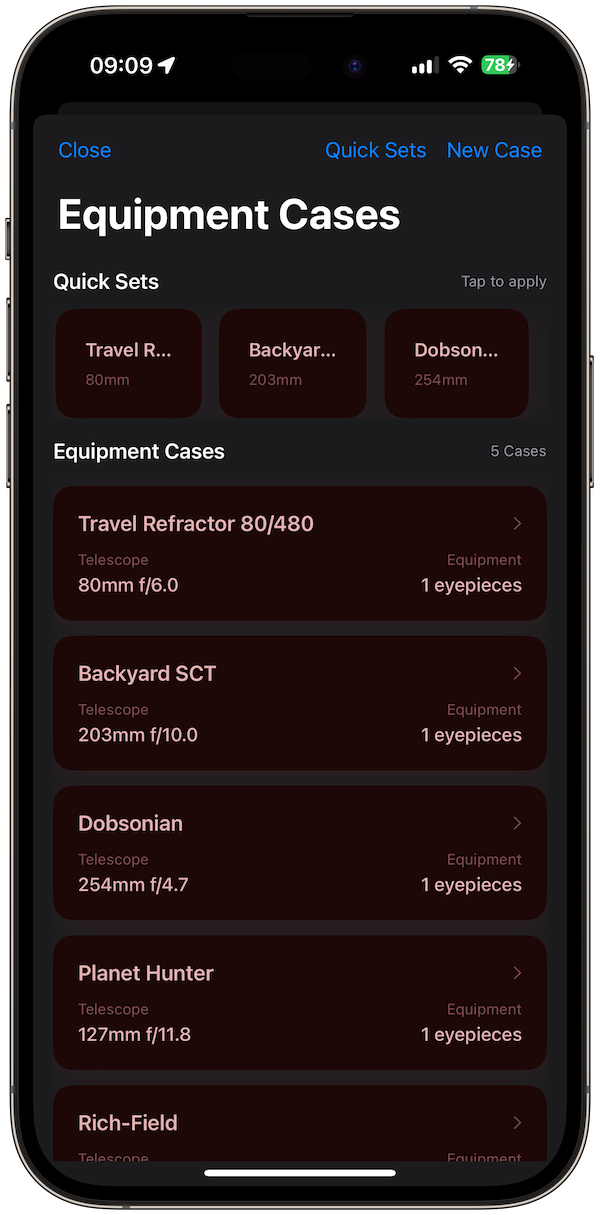
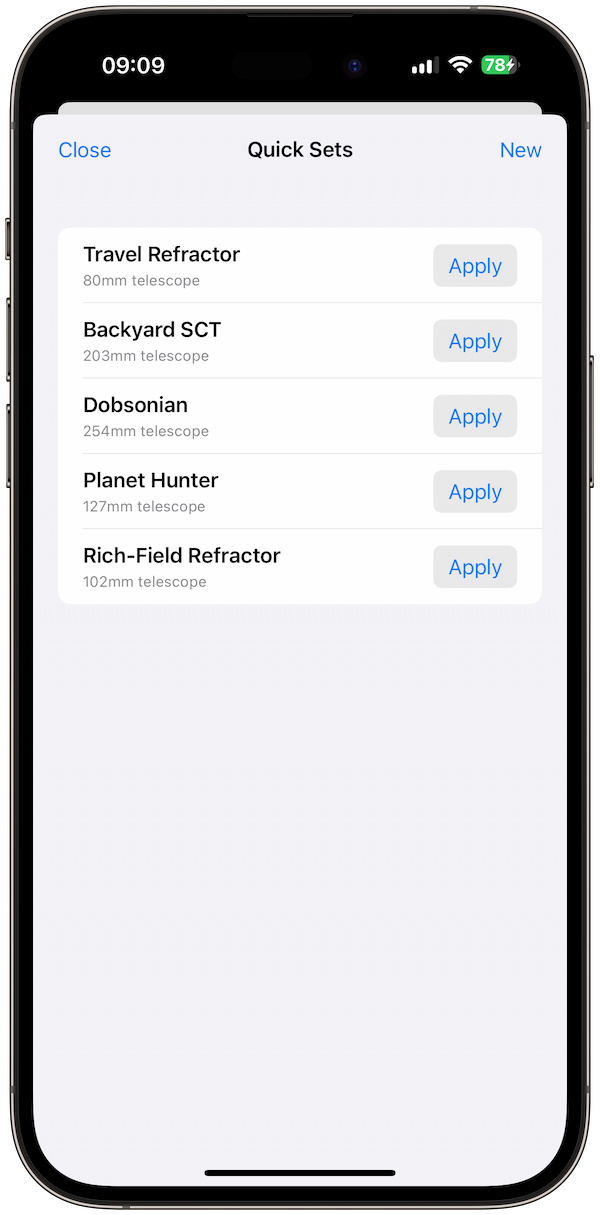
- Equipment cases: Save telescope and eyepiece combinations for quick reference
💡 Pro Tip: Use Telescope Eyepiece Calculator Pro's "Equipment Cases" feature to save your favorite telescope and eyepiece combinations for quick reference during observing sessions.
Professional Tips for Magnification Selection
- Start low: Begin with low power to find objects, then increase magnification
- Match to conditions: Use higher magnification only when atmospheric seeing is good
- Consider your target: Planets need high power, nebulae need low power
- Test your limits: Find your telescope's practical maximum magnification
Final Thoughts
Magnification is one of the most important aspects of telescope use. The formula is simple, but choosing the right eyepiece for each target requires practice and planning. With Telescope Eyepiece Calculator Pro, you can skip the math and focus on the sky, confident that you're always using the right setup.
Ready to optimize your telescope setup? Download Telescope Eyepiece Calculator Pro and get instant, accurate magnification calculations for any telescope and eyepiece combination.
References
- NASA: How Do Telescopes Work?
- University of Arizona: Astronomy Department
- Sky & Telescope: Astronomy Magazine
- Cloudy Nights: Astronomy Community
Related Guides: Learn about exit pupil calculations and field of view optimization for better telescope performance.